 中文
中文 Why Similar Sweater Designs Can Produce Very Different Results?
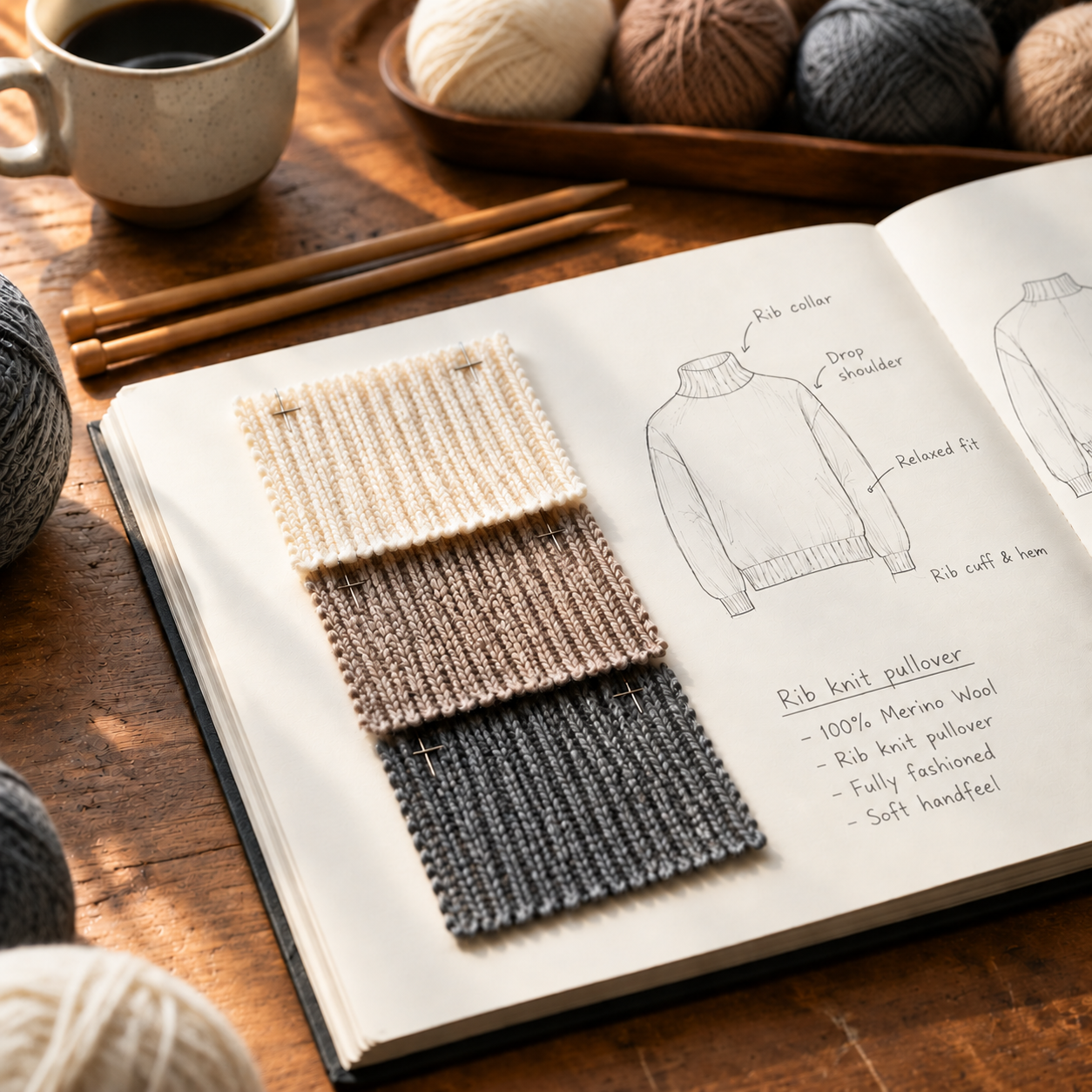
Two sweaters can look very similar on paper.
They may share a similar silhouette, neckline, color, and overall design direction.
But once they are knitted, assembled, and finished, the results can feel surprisingly different.
One may look soft, balanced, and refined.
The other may feel firmer, flatter, heavier, or more structured.
Why?
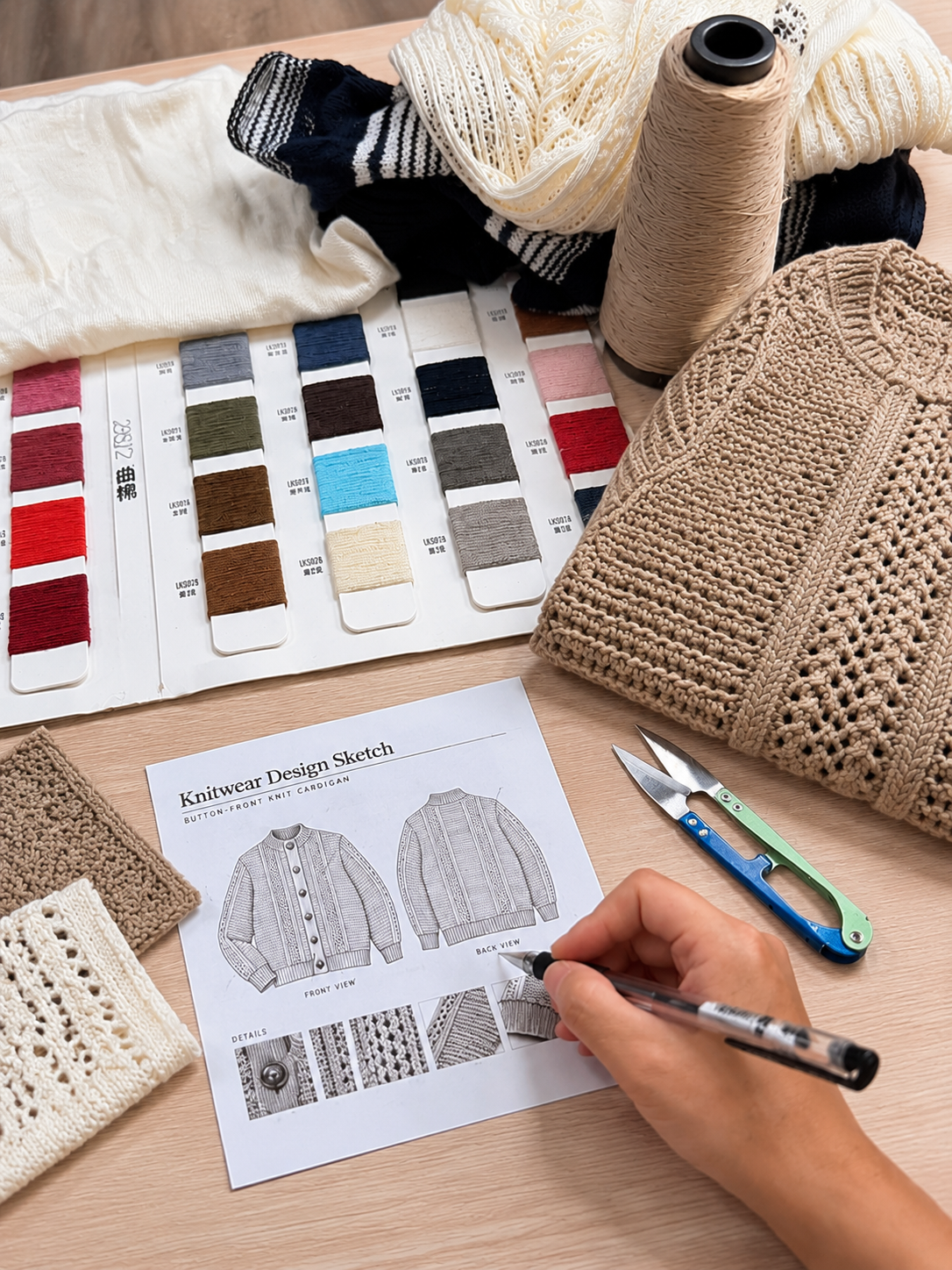
Because in knitwear, a design sketch defines the creative direction—but it does not define every technical decision behind the finished garment.
Similar design direction does not necessarily mean identical technical specifications or an identical final result.
The finished sweater is shaped by how the yarn, stitch structure, proportions, construction, and finishing work together.
Here are five areas that often explain why visually similar sweater designs can produce very different garments.
1、Similar Fiber Content Does Not Mean Similar Hand Feel
Two sweaters may both be labeled 100% cotton, but that does not mean they will feel the same.
Fiber content tells you what the yarn is made from.
It does not fully tell you how the finished fabric will feel.
One cotton sweater may feel soft and full, while another feels firmer, denser, or less flexible.
The difference may come from the yarn specification itself, how the fabric is knitted, and how the garment is finished.
Factors such as yarn count, twist, stitch structure, and knitting density can all influence the final hand feel.
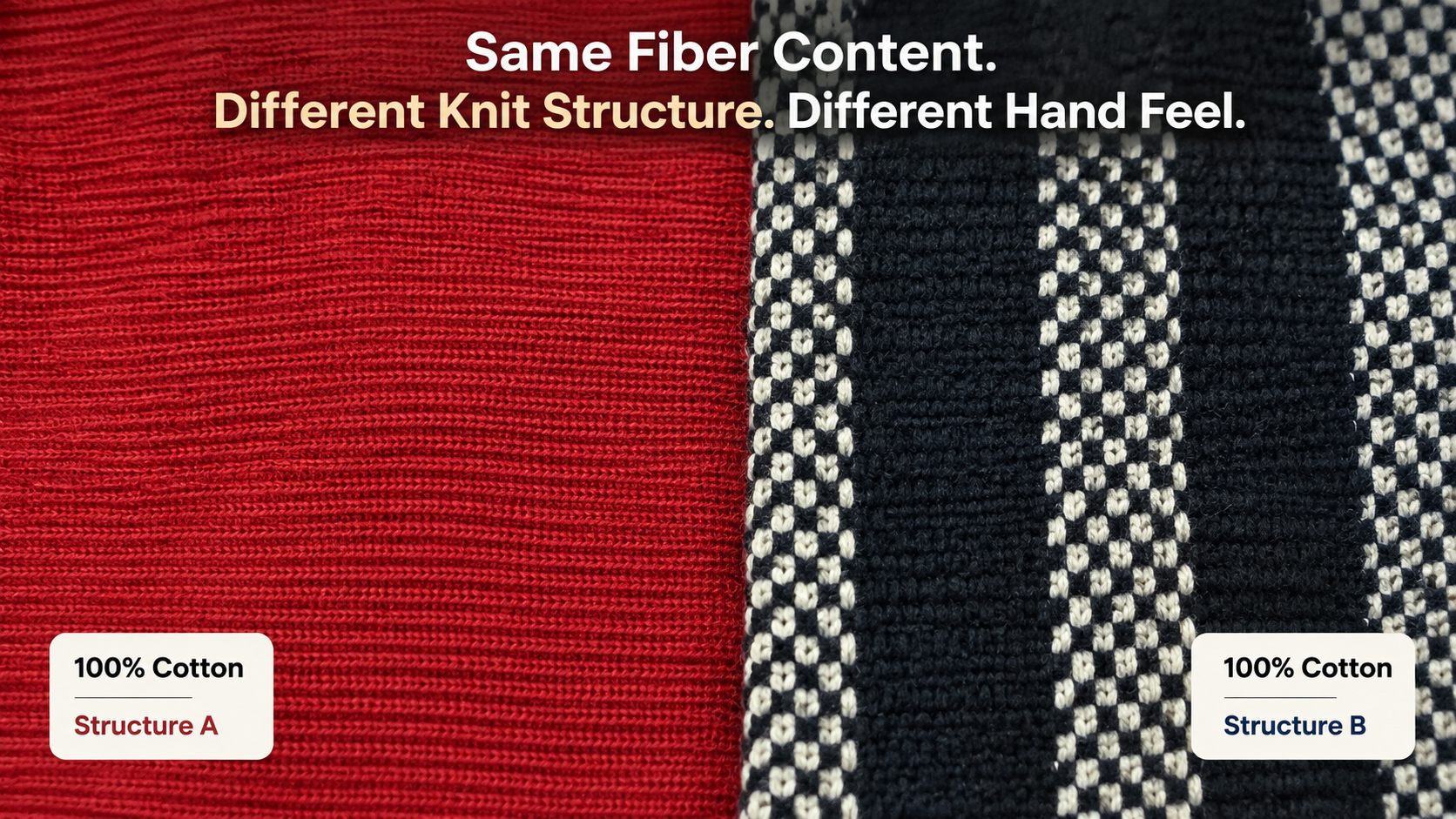
So specifying “100% cotton” is only the starting point.
The real question is:
How is that cotton being used to create the intended fabric?
This is why two sweaters with the same fiber composition can still have very different character.
2、Similar Measurements Can Still Create Different Silhouettes
Two sweaters can have very similar measurement charts and still look different when worn.
This is especially common with oversized and relaxed knitwear.
For example, two sweaters may have almost the same chest width.
But if one has a wider shoulder and fuller sleeve while the other has a narrower shoulder and slimmer sleeve, the overall silhouette can look completely different.
Other details can also change the balance of the garment:
- Shoulder position
- Sleeve volume
- Body length
- Neckline shape
- Rib depth
- Overall proportion
This is why measurements and proportions are not exactly the same thing.
A specification sheet can confirm individual dimensions.
A physical garment shows how those dimensions work together.
When reviewing knitwear, the question is not only:
“Are the measurements correct?”
It is also:
“Do these measurements create the intended silhouette?”
A premium yarn cannot compensate for proportions that do not work together.
3、The Same Yarn Can Look Completely Different in Another Stitch Structure
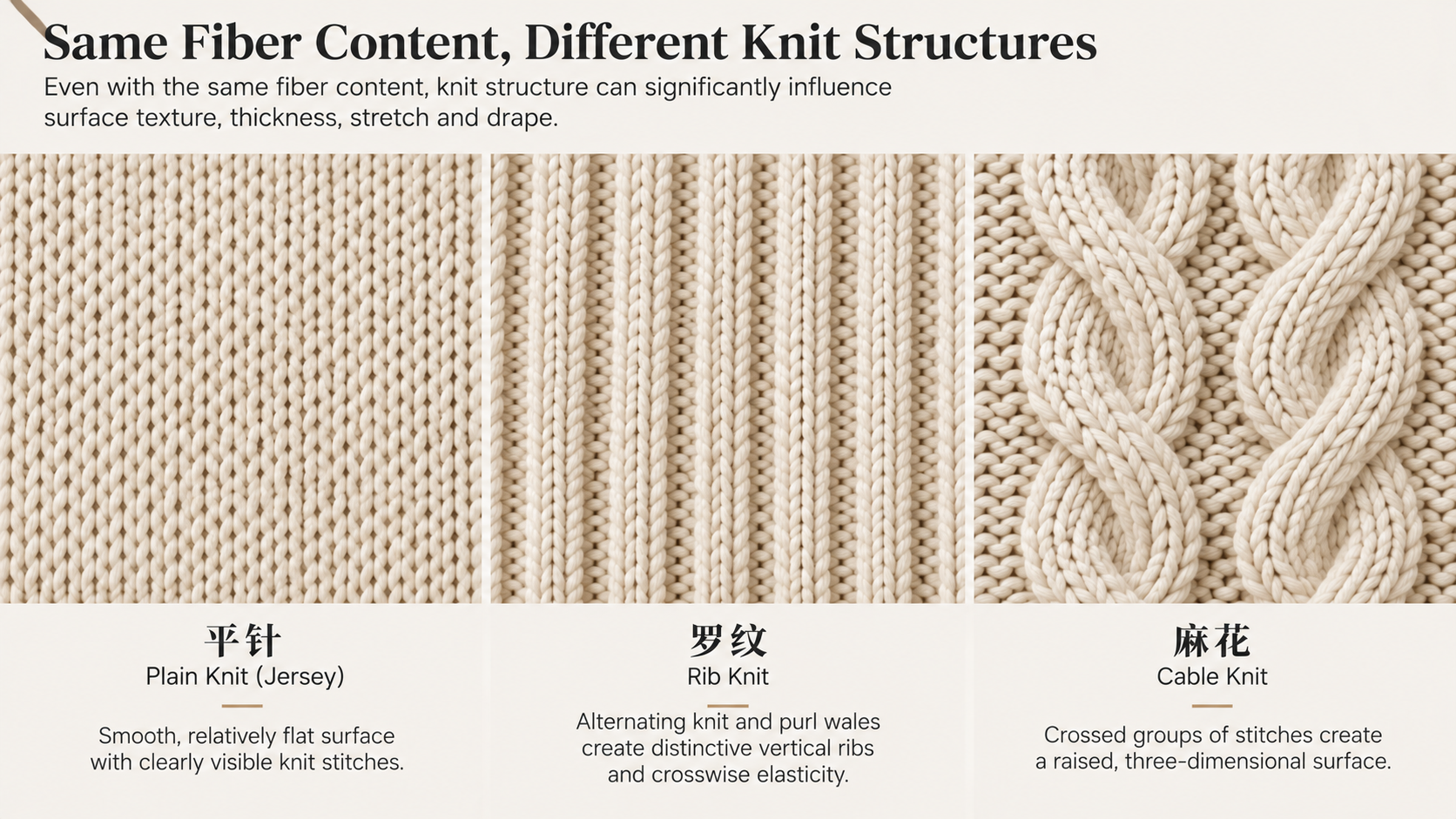
Even when the yarn stays the same, changing the stitch structure can significantly change the character of the sweater.
A plain jersey may create a relatively smooth and clean surface.
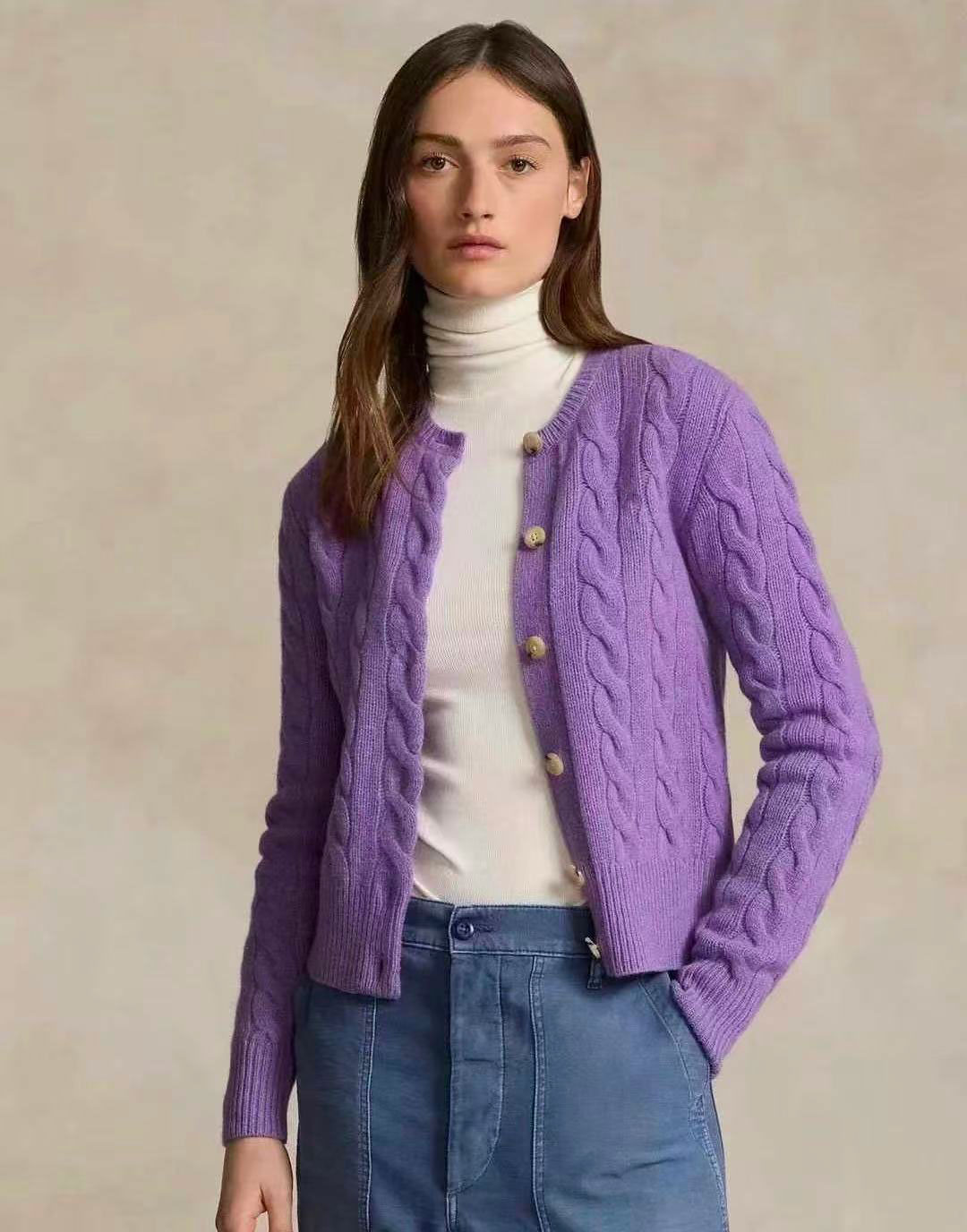
A cable structure can create more depth, texture, and visual volume.
A rib structure adds elasticity and can make the fabric feel more compact.
So, the same yarn can produce very different visual and physical results depending on how it is knitted.
This becomes especially important when a designer wants several qualities at the same time.
For example:
A sweater that looks chunky but still feels relatively lightweight.
Using a thicker yarn may seem like the obvious solution.
But a thicker yarn can also increase garment weight.
In some cases, the desired visual volume can be created more effectively through stitch structure rather than simply increasing yarn thickness.
This is why the question is not always:
“Which yarn should we use?”
Sometimes it is:
“How should this yarn be knitted to create the intended result?”
4、Similar Knitted Panels Can Still Produce Different Finished Garments
The quality of the knitted panels is important, but the finished sweater also depends on how those panels are assembled.
This is particularly relevant for fully fashioned knitwear.
Two garments may use similar yarns and similar knitted structures, but differences in linking and construction can affect how the final sweater sits and feels.
For example, uneven linking tension can influence:
- Shoulder shape
- Neckline position
- Seam appearance
- Comfort
- Garment balance
A neckline may sit cleanly in one garment but look slightly distorted in another.
A shoulder seam may lie flat in one sweater but feel bulky in another.
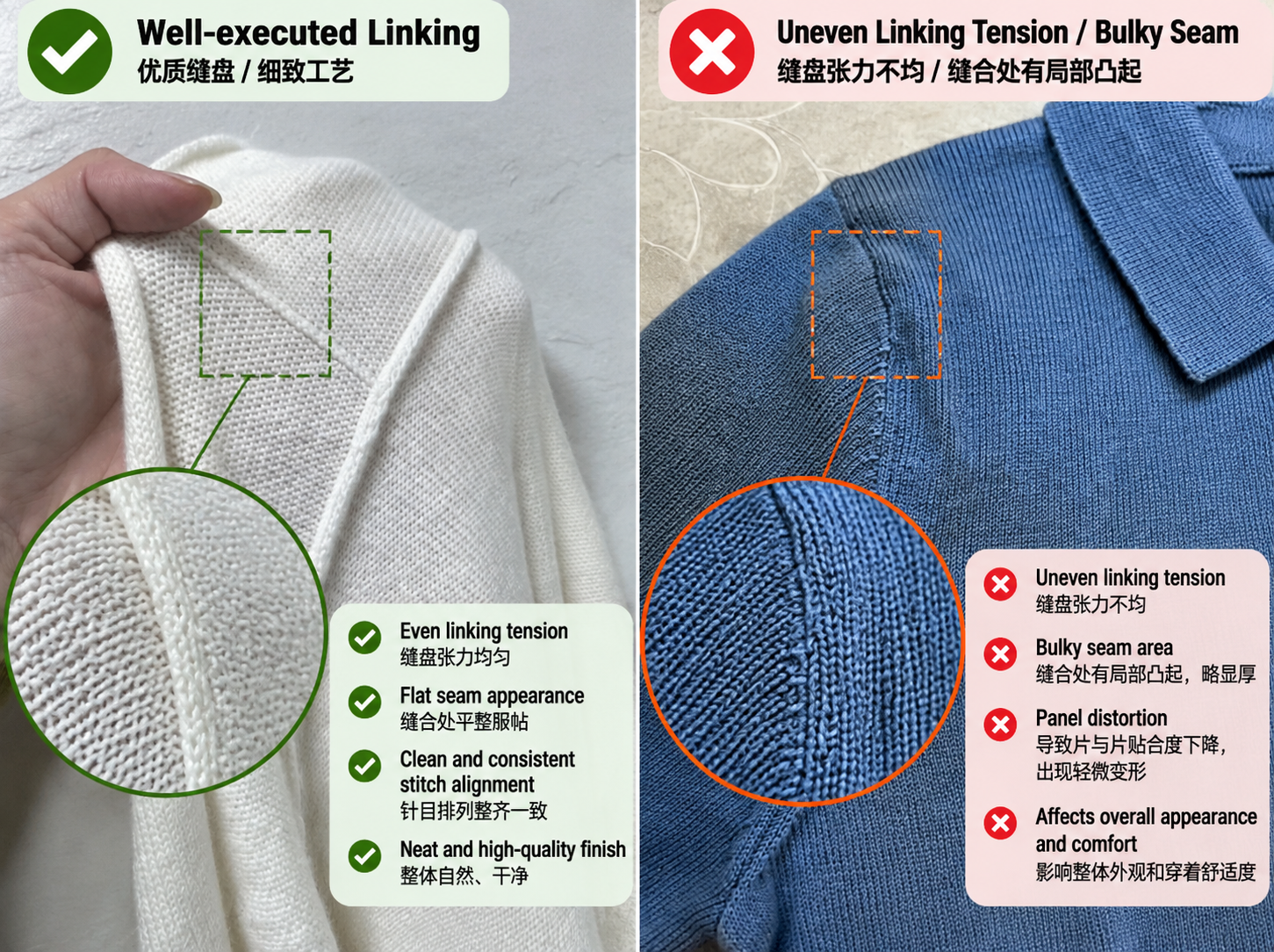
These differences may look small when the panels are viewed separately, but they can become much more noticeable once the garment is assembled.
This is why good knitting alone does not guarantee a good finished sweater.
Construction is part of the final appearance.
5、Similar Sweaters Can Change Differently During Finishing
Even after knitting and assembly, the final result is not always fixed.
Depending on the yarn and product, finishing may include washing, steaming, pressing, brushing, or final shaping.
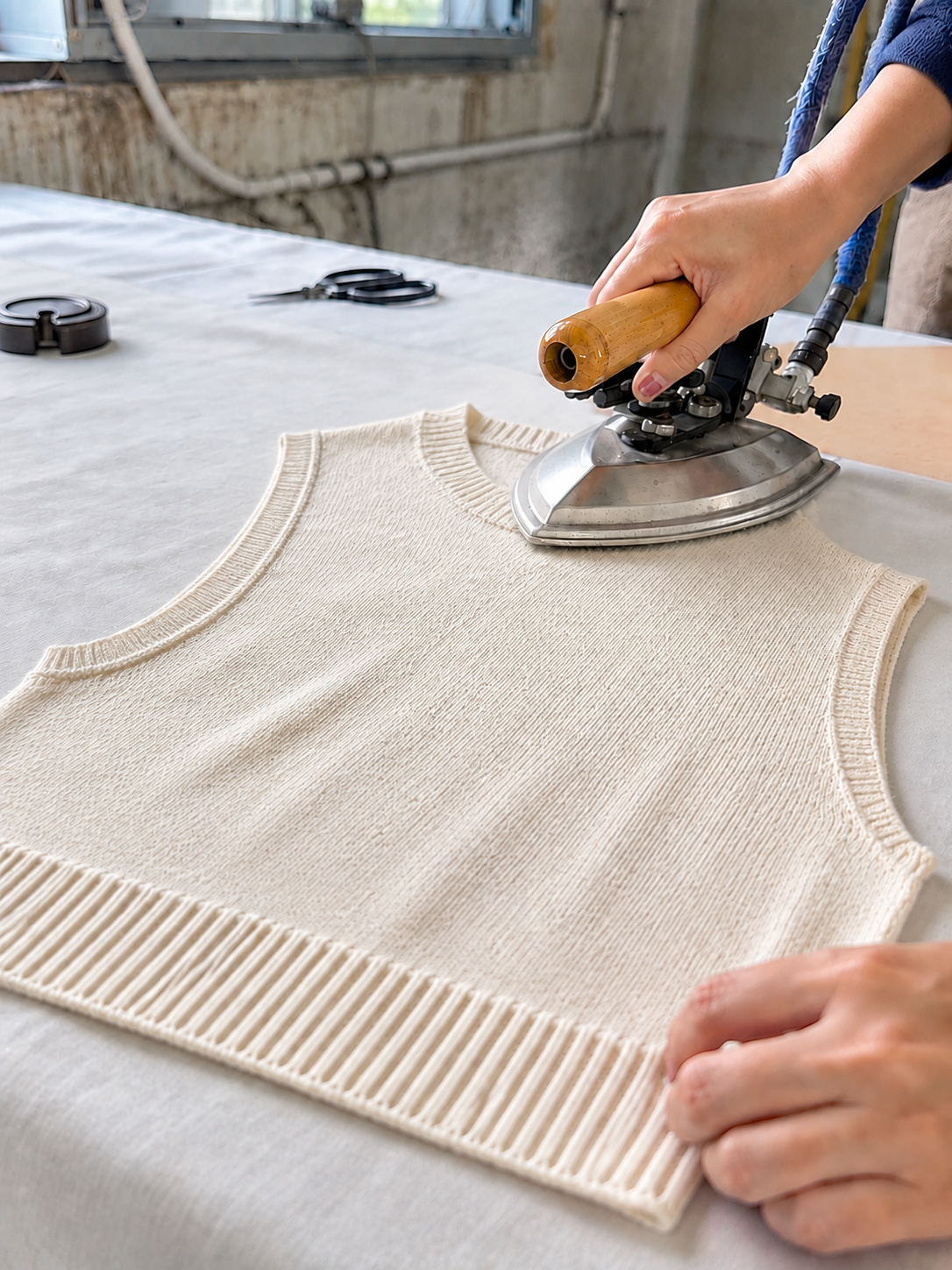
These processes can affect:
- Hand feel
- Dimensions
- Drape
- Surface appearance
- Shape
Two sweaters that look similar before finishing may behave differently afterward.
One fabric may become softer and more relaxed.
Another may remain firmer or change slightly in width or length.
This is why the finished garment should be evaluated after the intended finishing process has been completed.
Finishing is not simply a cosmetic step.
It can still change how the sweater looks and feels.
Why Small Technical Differences Matter
Many of these differences may appear small on paper.
A slightly different yarn specification.
A different stitch structure.
A little more sleeve volume.
A different linking tension.
A different response during finishing.
But knitwear is highly interconnected.
A small technical change can affect more than one part of the garment.
For example:
- A more textured structure may create greater visual volume but also increase yarn consumption.
- A denser fabric may improve stability but feel firmer.
- A fuller sleeve may improve the intended silhouette but change the overall balance of the garment.
- Finishing may improve hand feel while also affecting dimensions.
This is why two sweaters with similar design directions can still become very different physical products.
Different Does Not Necessarily Mean Wrong
A different result is not automatically a production problem.
It may simply reflect a different technical interpretation of the same design direction.
One brand may want a soft, relaxed, lightweight sweater.
Another may prefer a denser, more structured garment.
Both can be correct.
The important question is whether the technical choices support the intended product.
That is where knitwear development goes beyond simply following a sketch.
The design may show what the sweater should look like.
The development process determines how that result is actually achieved.
The Final Result Comes from the Combination
A good sweater is rarely the result of one “perfect” yarn or one ideal machine setting.
It comes from how the yarn, stitch structure, proportion, construction, and finishing work together.
When those elements support the same design intention, the garment feels coherent.
When they do not, two sweaters that looked similar on paper can end up looking and feeling very different.
The difference is often not in the sketch itself, but in the technical decisions made between the sketch and the finished garment.