 中文
中文 Why Can Two Similar Sweaters Have Very Different Production Costs?
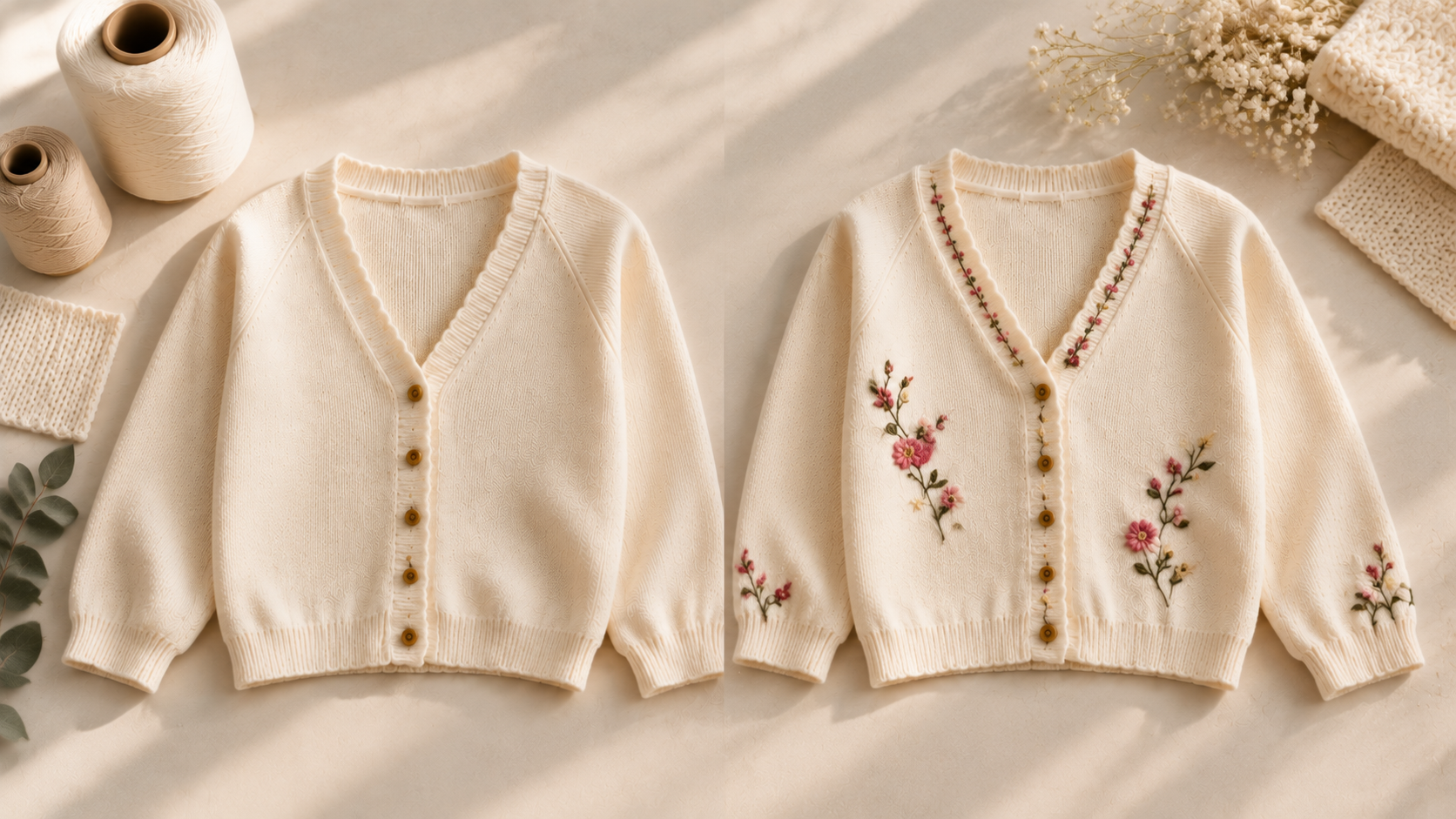
Two sweaters can look very similar in a sketch or product photo.
They may have a similar silhouette, similar color, and even a similar fiber composition.
But visually similar does not always mean operationally similar.
One sweater may require more yarn.
Another may take longer to knit.
A third may need more manual assembly, decoration, or finishing.
That is why two sweaters that look similar can still receive very different production quotations.
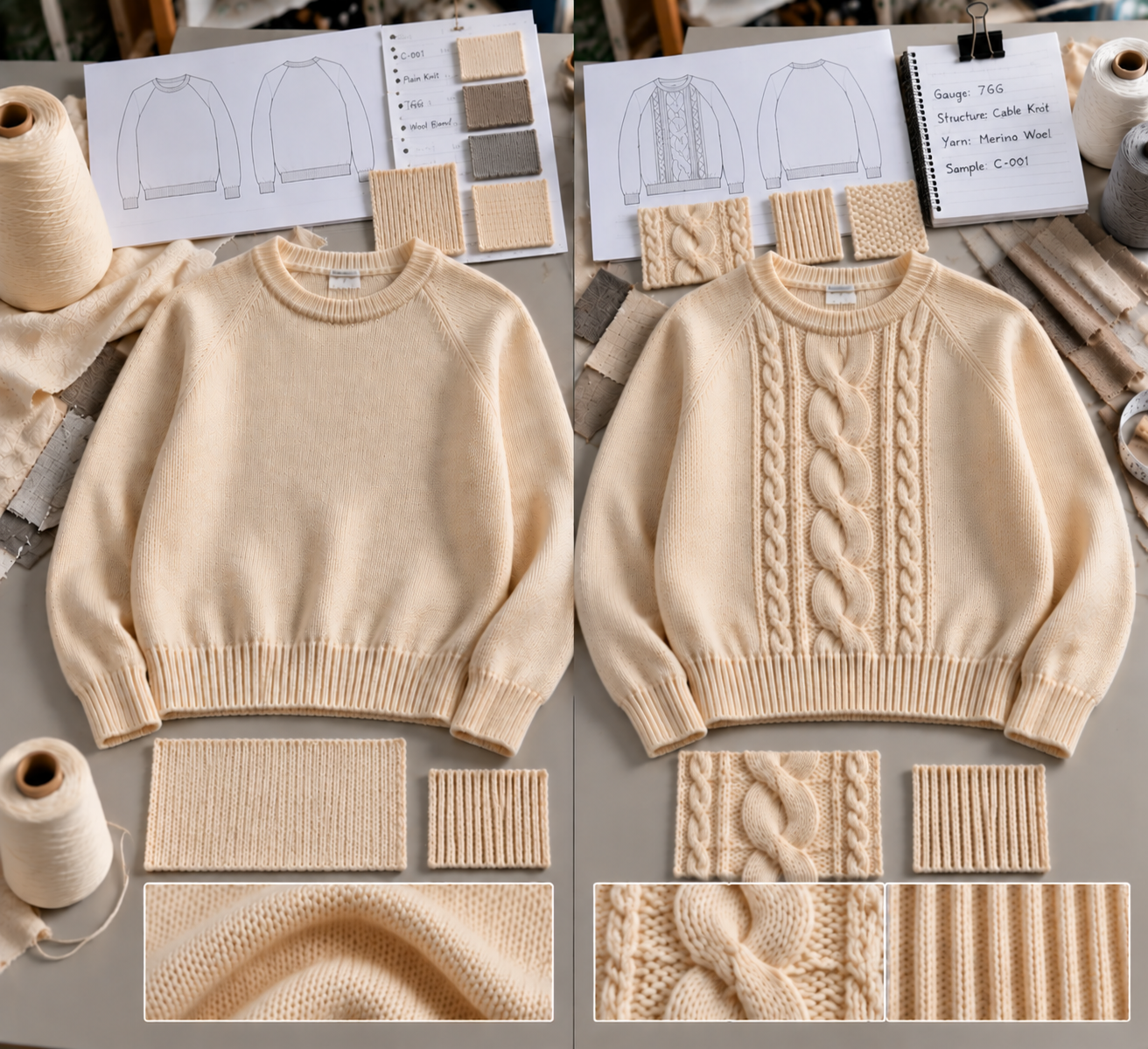
The cost of knitwear is not determined by appearance alone—and it is not determined by yarn price alone.
It comes from the combination of:
material consumption + machine time + manual operations + additional processes + finishing + production quantity
Here are five areas that often explain the difference.
1.Similar Yarn Prices Can Still Create Different Material Costs
When comparing sweater prices, it is natural to start with the yarn.
But the price per kilogram is only part of the material cost.
What also matters is:
How much yarn does the garment actually consume?
Two sweaters can use similarly priced yarns but still have different material costs if one consumes more yarn because of its silhouette, structure, density, or additional knitted components.
For example, a relaxed oversized sweater with deep ribs and a textured structure may require more yarn than a cleaner style using a similar yarn.
Color can also affect sourcing.
Where available, a stock color may reduce the need for custom dyeing, while custom colors can introduce additional minimums, lead time, or leftover yarn depending on the supplier and order quantity.
So, the more useful question is not simply:
“How expensive is this yarn?”
It is:
“What yarn are we using, and how much of it does this design require?”
2.Similar-Looking Structures Can Require Very Different Machine Time
A visual detail that looks small on paper can have a much larger impact on knitting time.
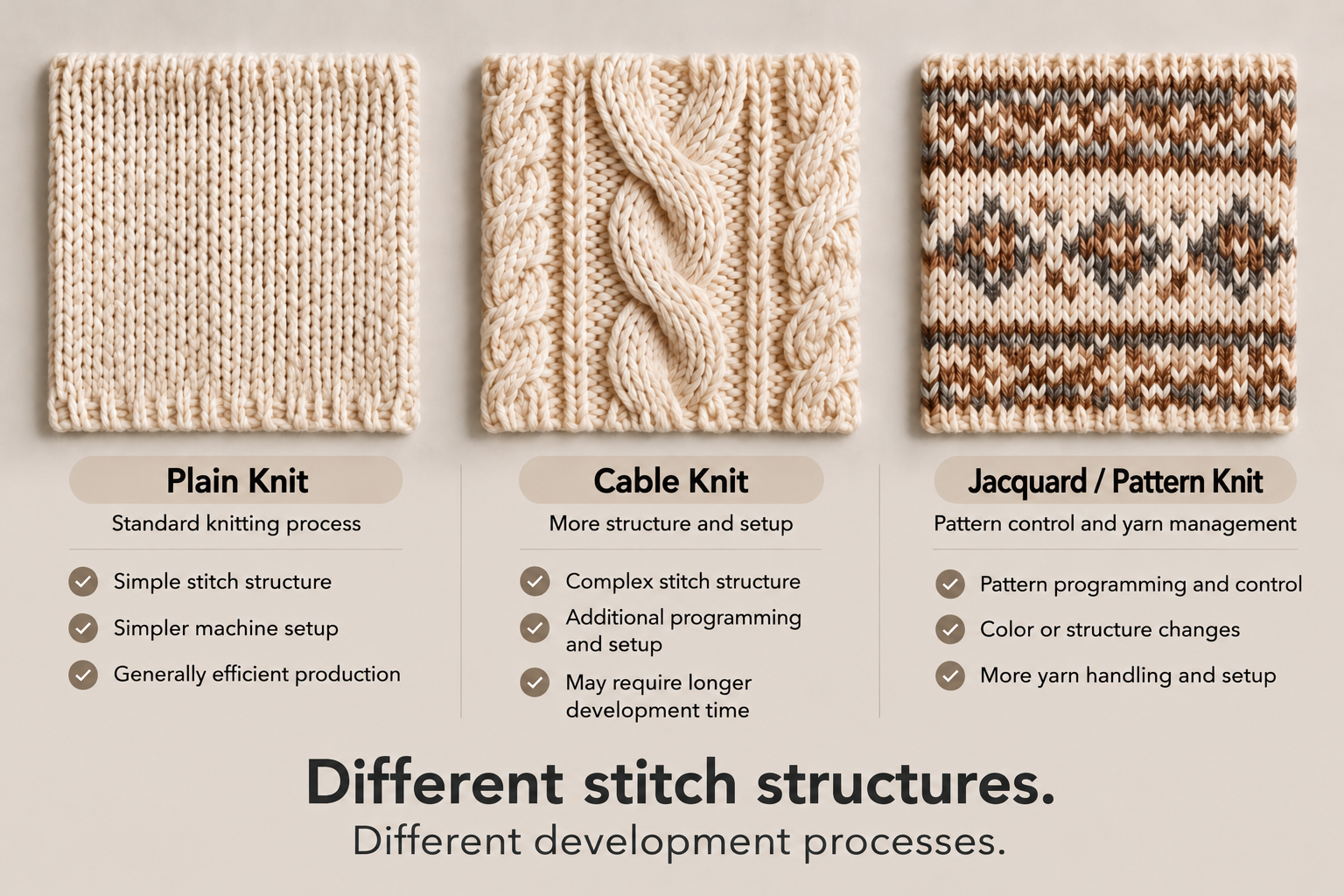
A basic jersey body and an all-over cable body may have a similar overall silhouette, but they do not follow the same production route.
More complex structures may require additional needle transfers, slower knitting speeds, and more technical preparation.
The scale of the detail matters too.
A small cable panel may have a limited effect.
An all-over cable structure can significantly increase machine time.
Likewise, a simple two-color pattern is very different from a design with multiple separate color areas.
So, the difference is not simply:
“Simple sweater” vs. “fancy sweater.”
It is:
How much machine work does the structure actually require?
3.Some Designs Are Machine-Intensive. Others Require More Manual or Additional Processing.
Not every type of complexity happens on the knitting machine.
Some details mainly increase the amount of work required after the knitted panels have been completed.
Examples include:
- Pockets
- Buttons and zippers
- Special trims and attachments
- Embroidery
- Printing
- Hand-applied rhinestones or other embellishments
- Pattern matching across seams
- More complicated assembly
These processes can add extra positioning, sewing, machine processing, manual handling, and quality inspection.
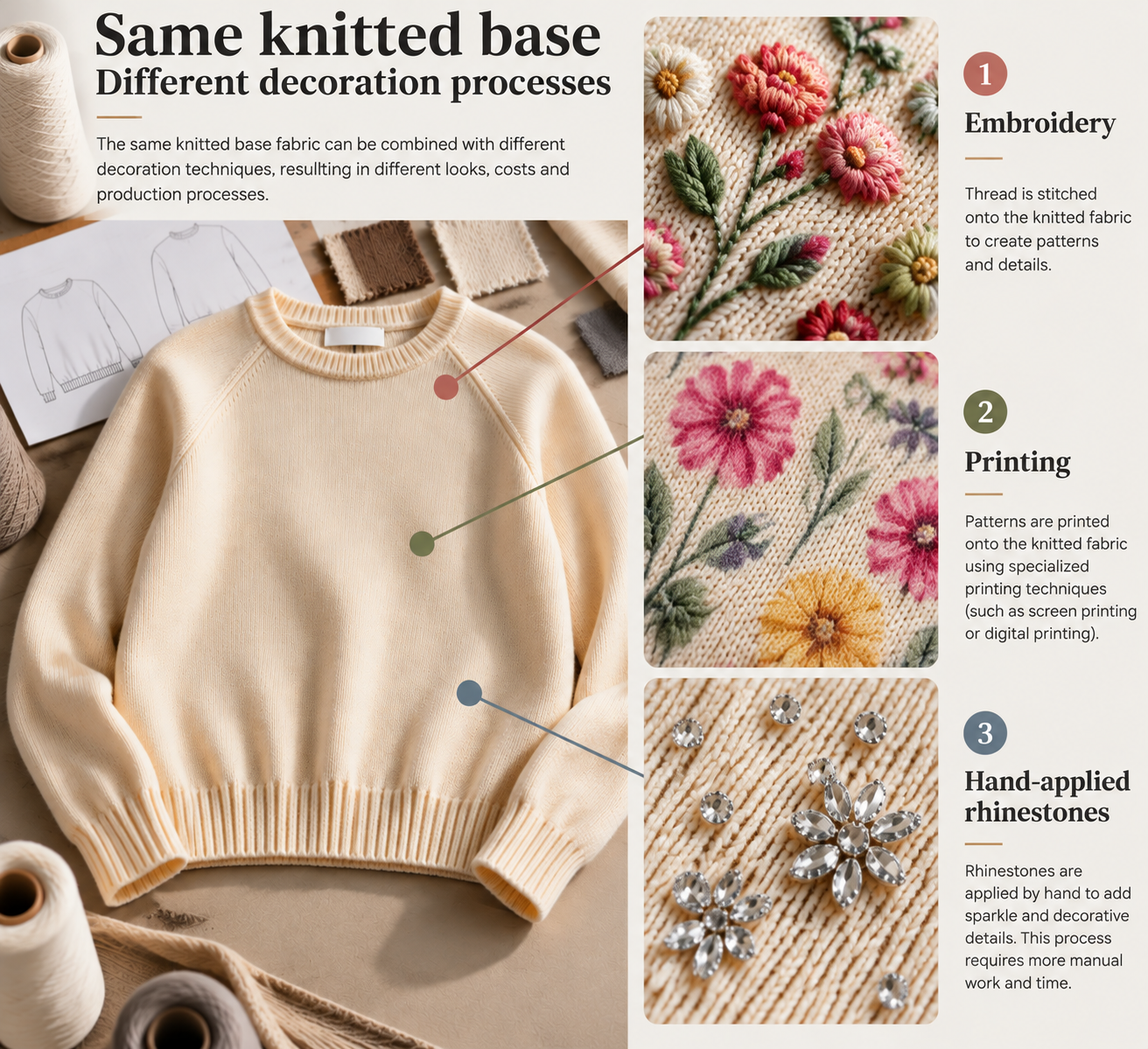
This creates an important distinction:
Some designs are machine intensive. Others are labor-intensive or process intensive.
A cable structure may mainly increase knitting time.
Embroidery or printing may require separate setup and processing.
Hand-applied rhinestones may require significantly more manual placement, checking, and handling.
The knitted base garment may be very similar, but the decoration process can create a very different cost structure.
The scale and complexity of the decoration matter too.
A small, embroidered logo is different from a large multi-area embroidery design.
A simple print is different from a large or multi-position print.
A few rhinestones are different from a dense hand-applied arrangement across a large area.
So, the cost difference comes from the complete production route behind the garment—not simply from how complicated it looks.
4.Similar Garments Can Require Different Finishing
The production process does not end when the sweater is knitted and assembled.
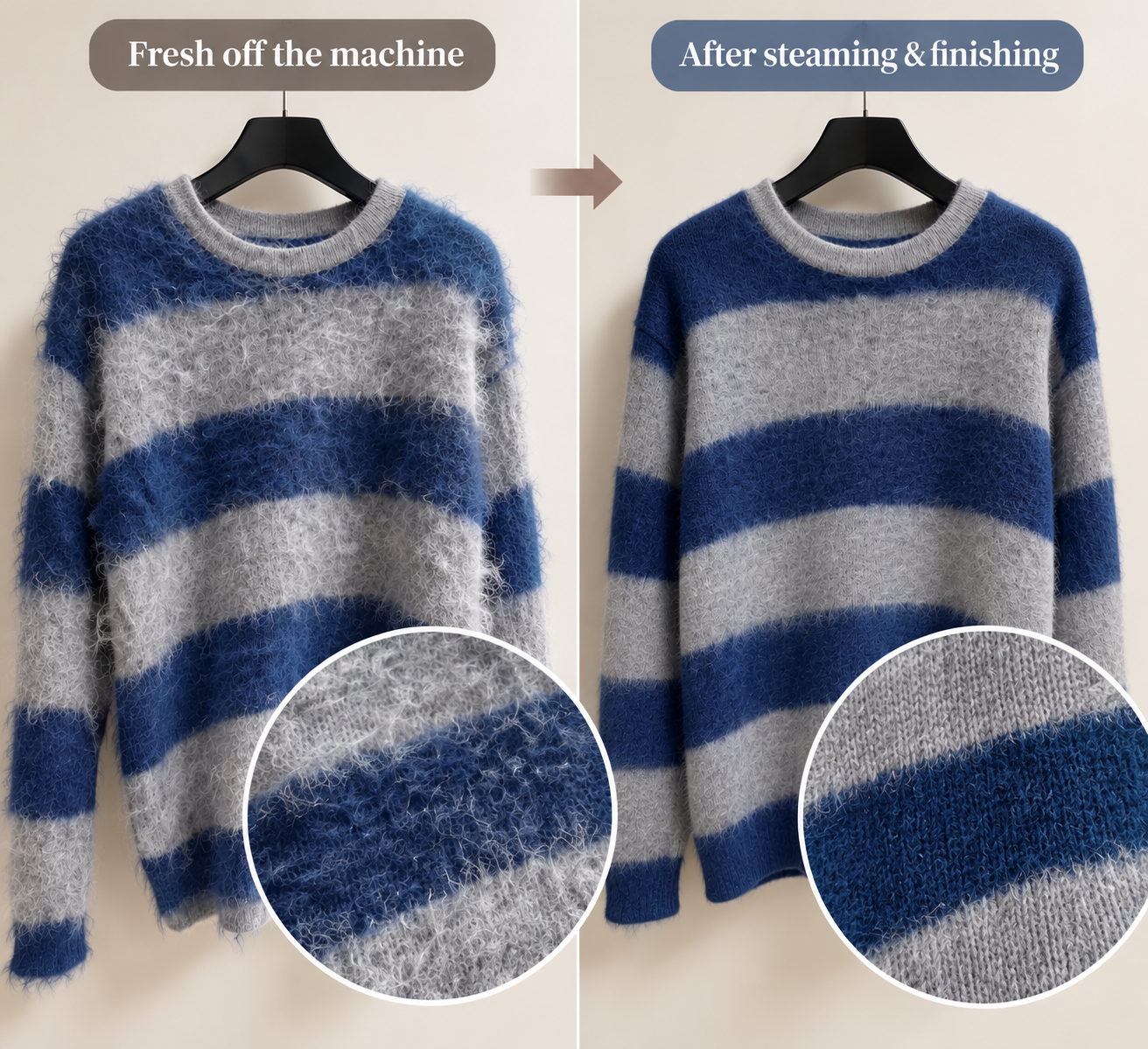
Depending on the product, finishing may include washing, steaming, pressing, brushing, special surface treatments, or additional shaping.
A standard finish and a brushed finish are not the same process.
Nor are they likely to require the same amount of handling, equipment time, or quality control.
This means two sweaters with similar yarn and similar knitting time can still have different production costs after assembly.
The quotation therefore needs to reflect the finished garment, not just the knitted panels.
5.The Same Total Quantity Can Still Create Different Production Conditions
Order quantity matters, but total quantity alone does not tell the whole story.
For example:
300 pieces in one color
is operationally different from:
300 pieces divided across five colors.
The total quantity is the same.
But sourcing, setup, shade control, and handling may be more fragmented in the second case.
Some development and setup activities also do not scale directly with order quantity, so their impact per piece can be greater in smaller production runs.
The exact effect depends on the style, material, color breakdown, and setup requirements.
The point is not that small orders are automatically expensive.
It is that:
quantity affects cost together with the way the order is structured.
Before Comparing Prices, Make Sure You Are Comparing the Same Product
When quotations from different manufacturers vary, the first question should not automatically be:
“Why is this factory more expensive?”
A meaningful comparison requires the same product assumptions.
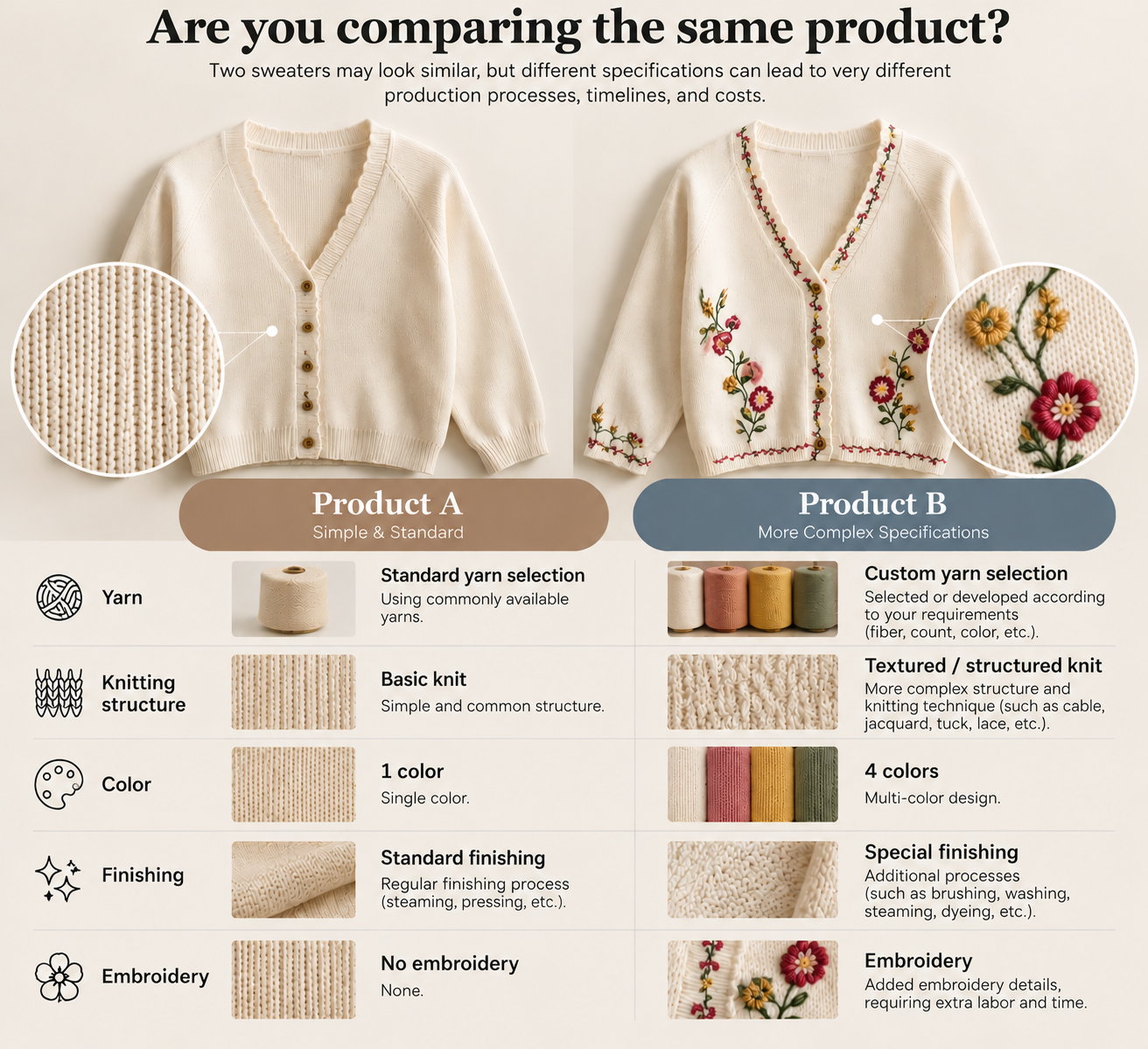
That means checking whether each quotation is based on the same:
- Yarn specification
- Stitch structure
- Construction
- Finishing
- Quantity
- Color breakdown
- Size range
- Trims, embellishments, and additional processes
A lower quotation may be based on a different yarn, simpler construction, fewer finishing requirements, fewer embellishment processes, or different quantity assumptions.
That does not automatically make the lower quotation wrong.
It may simply mean the two factories are not pricing the same product.
A more useful question is:
“What exact product specification is this quotation based on?”
Only then does the price comparison become meaningful.
If the Target Cost Is Too High, What Should Change First?
When a design comes in above the target cost, the solution does not always need to be:
“Use a cheaper yarn.”
The first step is to identify what is actually driving the cost.
Then ask:
Which details define the product—and which details add cost without contributing enough to the design?
For example, if an all-over cable structure is central to the product's identity, removing it entirely may damage the design.
A better option might be to keep the key cable detail while simplifying less important areas.
The same principle applies to decoration.
If embroidery, printing, or rhinestones are central to the visual identity of the style, they may be worth protecting.
But the size, coverage, number of positions, or application method may still be reviewed.
Depending on the style, possible adjustments may include:
- Keeping a key cable or texture while simplifying less visible areas
- Reducing the number of separate color areas
- Reducing the size or number of embroidery or print positions
- Simplifying rhinestone placement or other hand-applied decoration
- Reviewing trims or additional manual operations
- Using an available stock color where appropriate
- Simplifying non-essential finishing requirements
- Reviewing the color breakdown or production quantity
But not every cost driver should be removed.
Some are essential to the product and should be protected rather than optimized away.
Good cost engineering is therefore not about making the garment cheaper at any cost.
It is about understanding:
What is driving the cost, what is essential to the design, and what can be adjusted with the least impact on the final product.
The Final Cost Comes from the Production Route
The cost of a custom sweater is rarely determined by one factor.
It comes from the way several elements work together:
Yarn Value + Yarn Consumption + Machine Time + Manual Operations + Additional Processes + Finishing + Production Quantity
Two sweaters may look similar in a sketch but require very different production routes.
That is why the most useful quotation is not simply the lowest number.
It is a price based on a clearly defined product.
When the specification is clear, brands can understand not only what a sweater costs, but which technical and production decisions are driving that cost—and which of those decisions are worth keeping.