 中文
How to Get a More Accurate Quote for Custom Knitwear
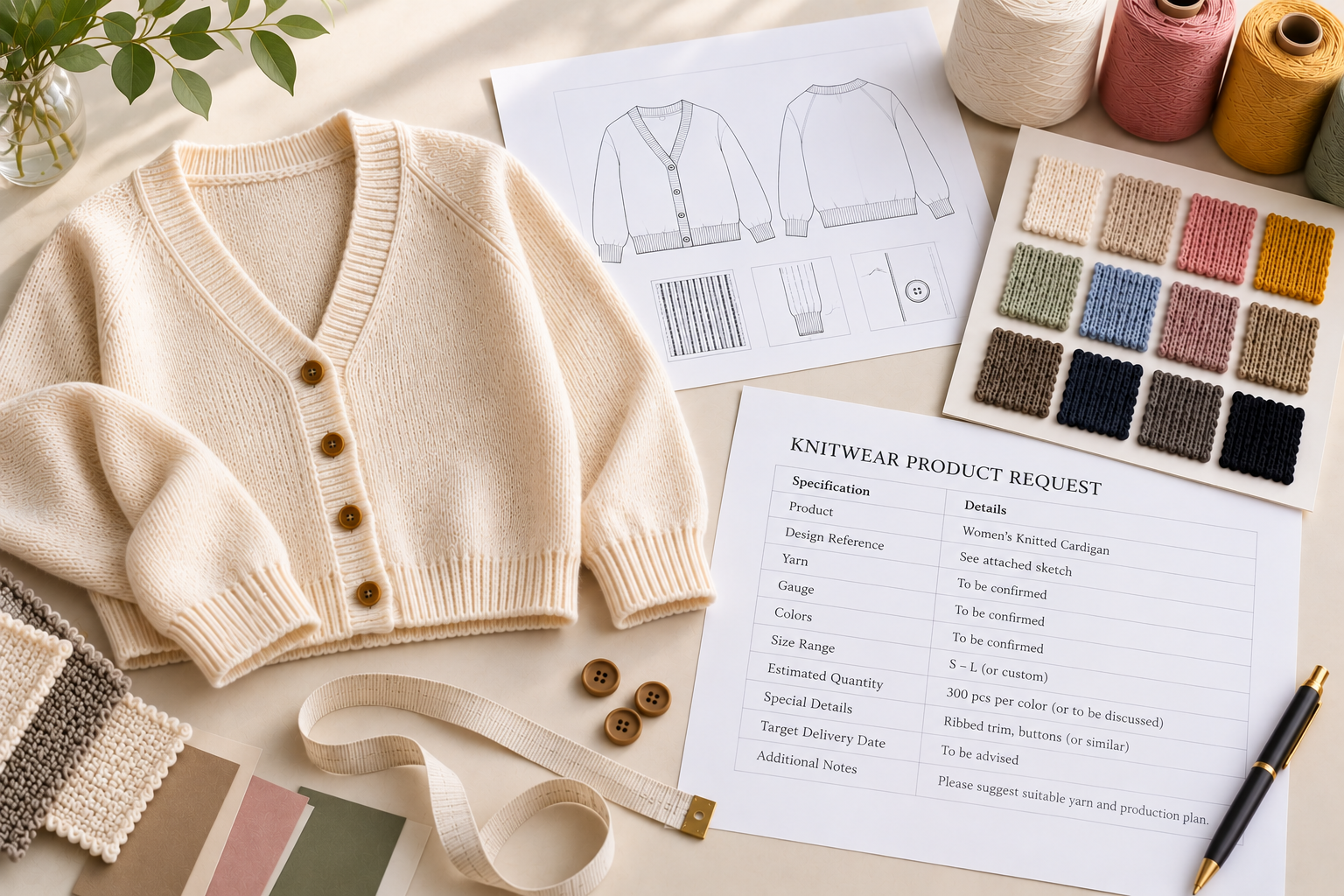
A fashion brand sends a reference photo of a sweater to a manufacturer and asks:
“How much would it cost to produce 300 pieces?”
It is a reasonable question. But a photo and a quantity are usually not enough for a reliable production quotation.
A reference image may show the overall design, but it cannot always communicate the yarn specification, garment measurements, construction details, or finishing requirements.
When important information is missing, manufacturers have to make assumptions. Different assumptions can lead to different quotations, even when suppliers are looking at the same design.
An initial estimate can help a brand evaluate a project and explore its options. However, the final production price may need to be confirmed once the materials, construction details, and production specifications have been finalized.
The good news is that you do not need a perfect tech pack to start. A clear, well-organized enquiry can already make the quotation process more useful.
Here is what to prepare when requesting a quote for custom knitwear.
1.Explain What Matters in Your Reference Images
Reference images are a useful starting point, especially during early product development.
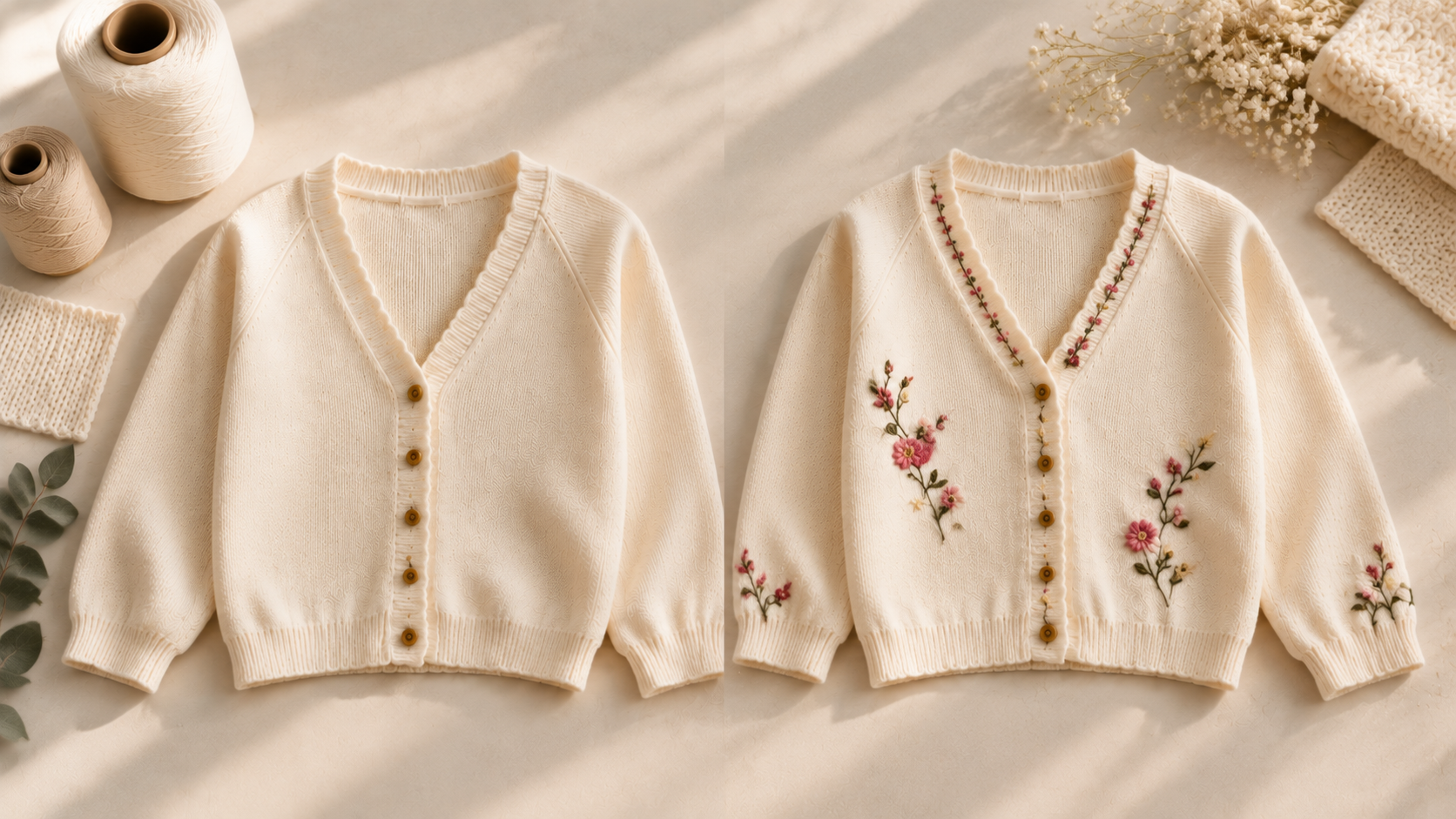
They can communicate the silhouette, neckline, proportions, color direction, and overall appearance of a sweater. However, they do not always explain which details you want to reproduce and which ones you are willing to change.
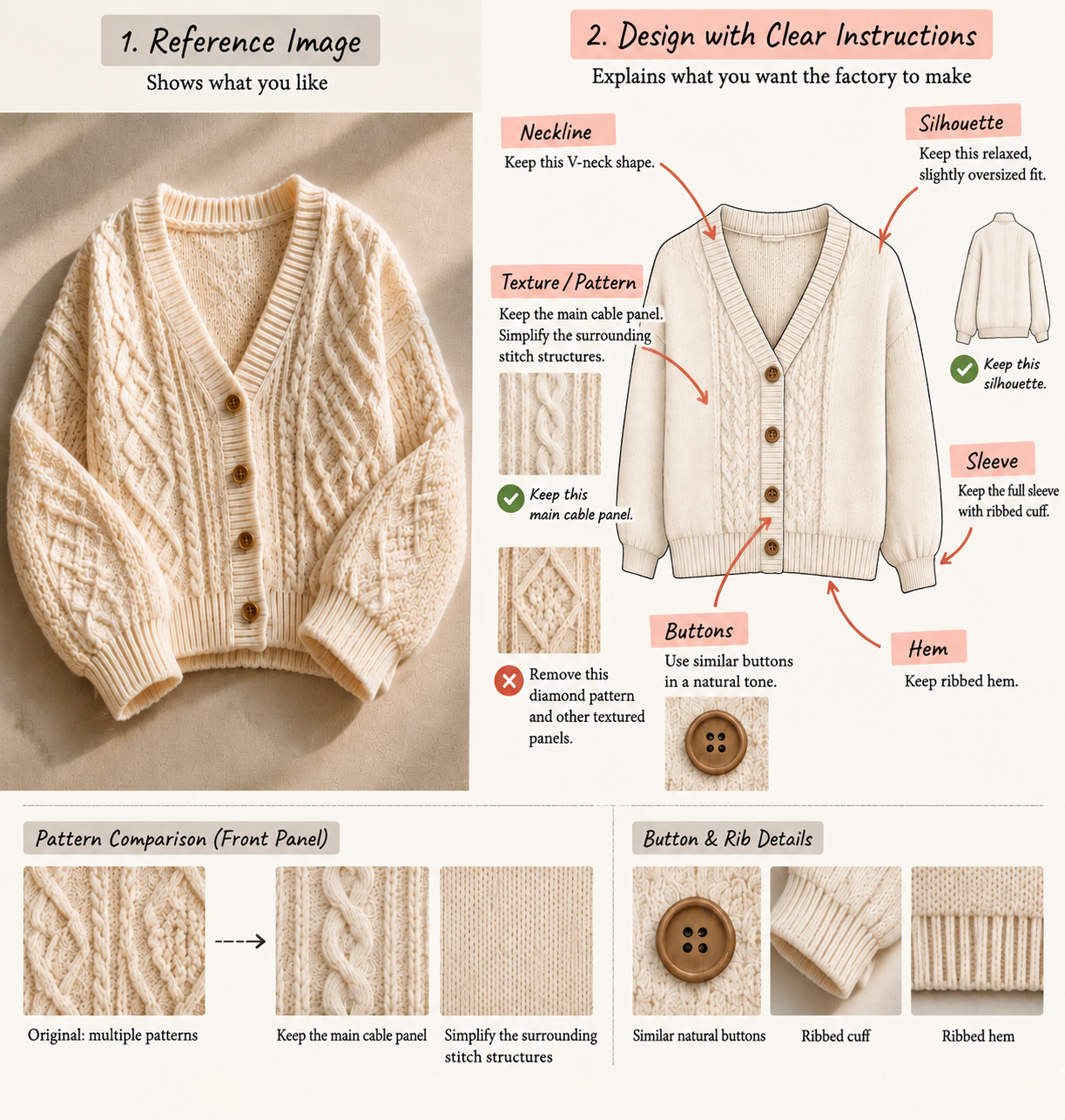
For example, instead of sending a photo without explanation, you could say:
“We like the silhouette and cable placement, but we want a lighter-weight sweater.”
Or:
“We want a similar cropped fit, but with a simpler knitted texture.”
These instructions help the manufacturer understand your priorities.
If you have an original design sketch, include it. If you are using reference photos, explain what you want to achieve rather than expecting the manufacturer to interpret every detail.
The clearer your design direction, the easier it becomes to evaluate suitable production options.
2.Provide a Material Direction, Even If the Final Yarn Is Not Decided
Yarn is an important part of any knitwear quotation, but brands do not always know the exact yarn specification at the beginning.
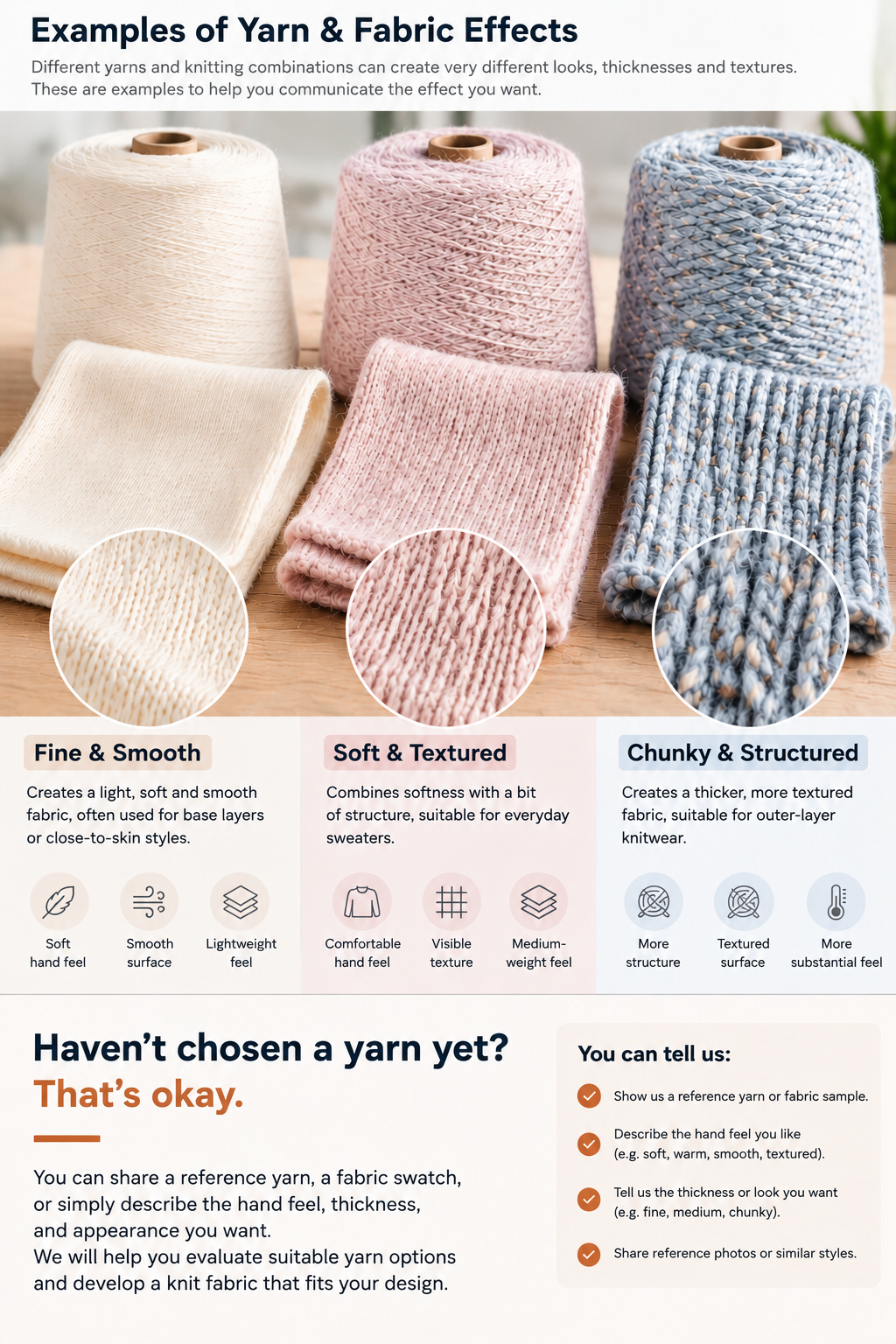
That is normal.
If you already have a confirmed yarn composition and specification, provide them.
If not, explain the result you want.
For example:
- Preferred fiber composition, such as cotton, wool, or a blended yarn
- Lightweight, medium-weight, or chunky appearance
- Soft, smooth, structured, or brushed hand feel
- Intended season and how the garment will be worn
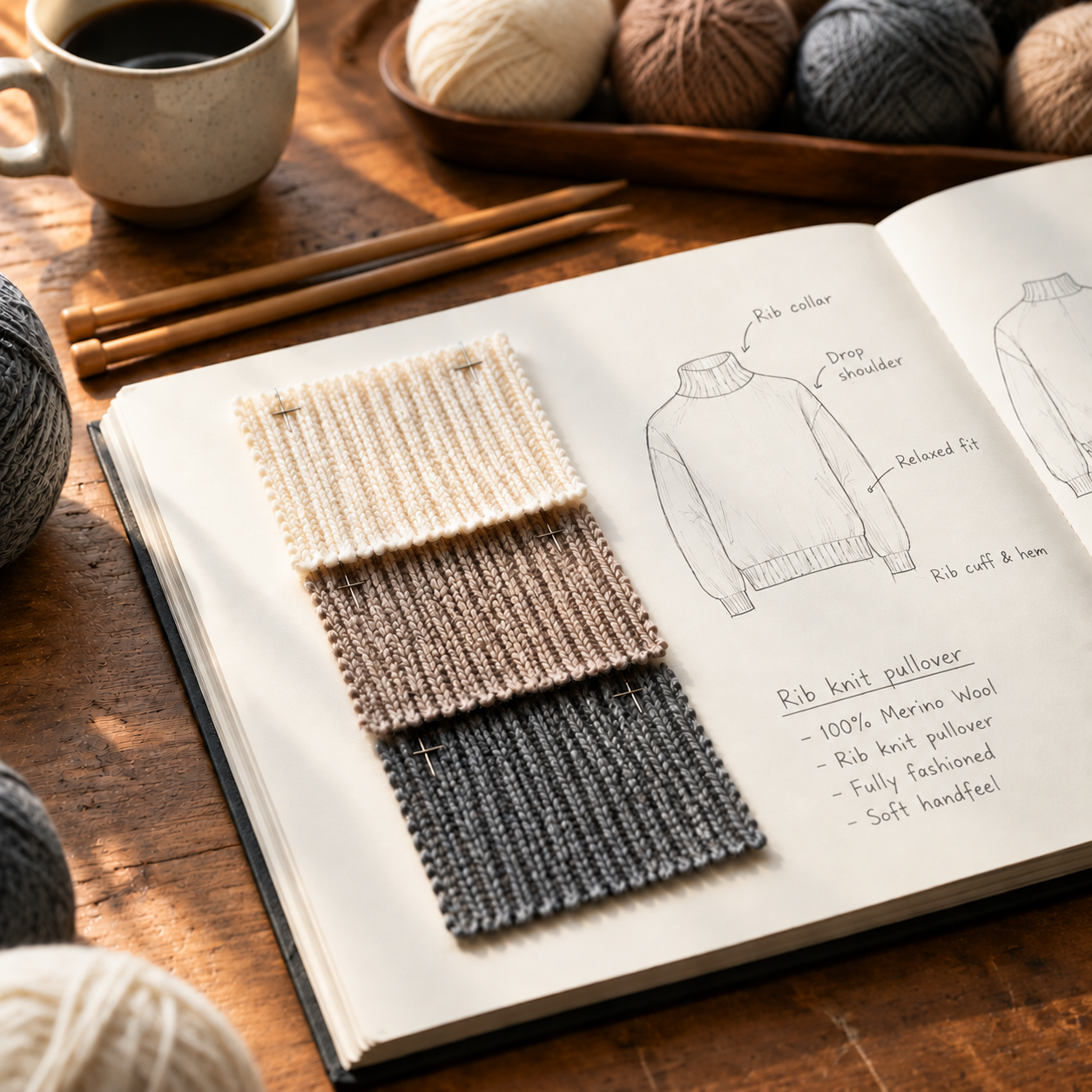
A physical reference sample can also help communicate the desired fabric feel and appearance.
You do not need to choose a yarn solely based on technical terminology. Describing the intended result gives the manufacturer a starting point for evaluating appropriate materials.
However, if the final yarn is still open, the quotation should reflect that uncertainty until the specification is confirmed.
3.Share the Intended Fit and Main Measurements
Terms such as oversized, regular fit, and cropped are helpful, but different people may interpret them differently.
Basic garment measurements provide a clearer reference.
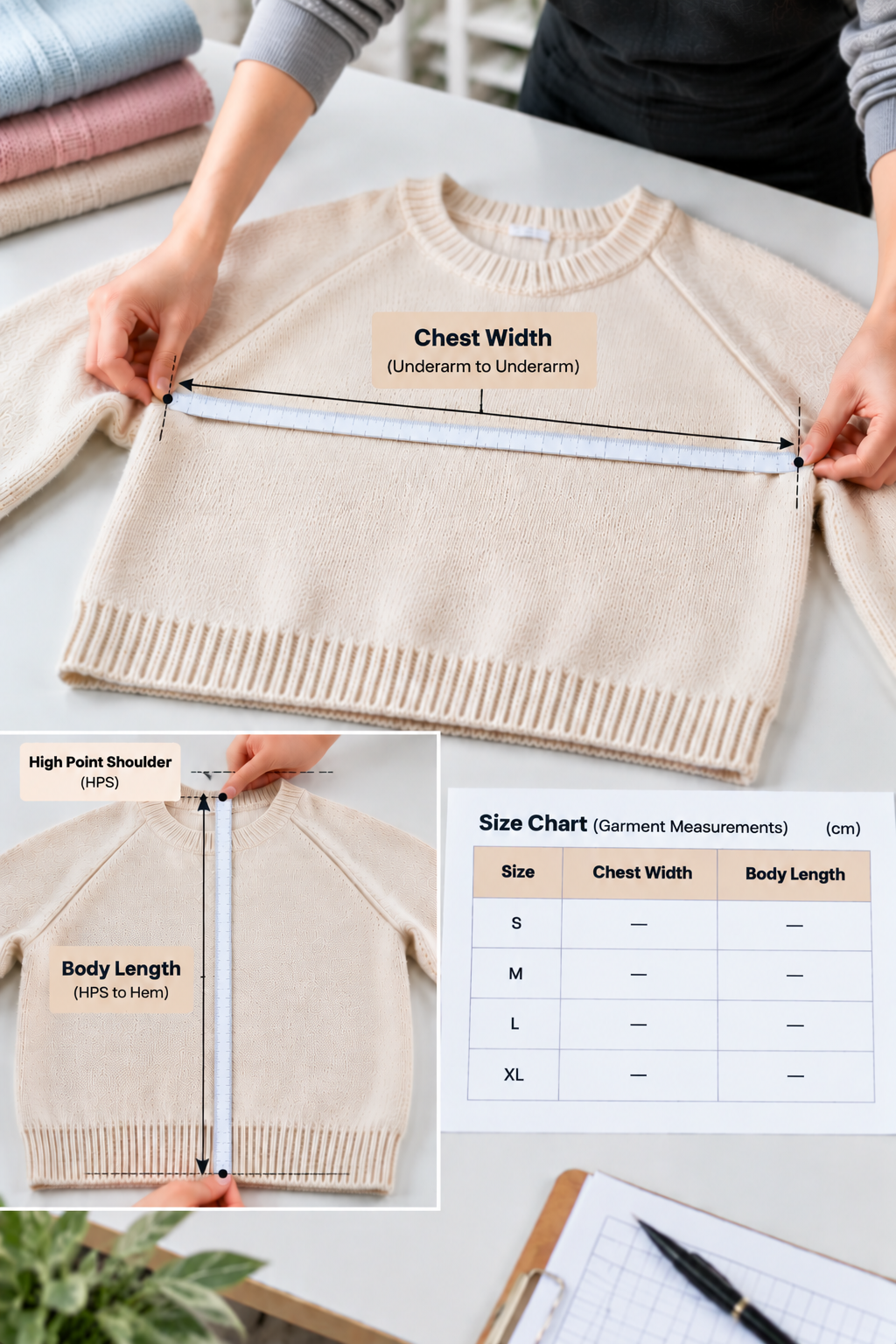
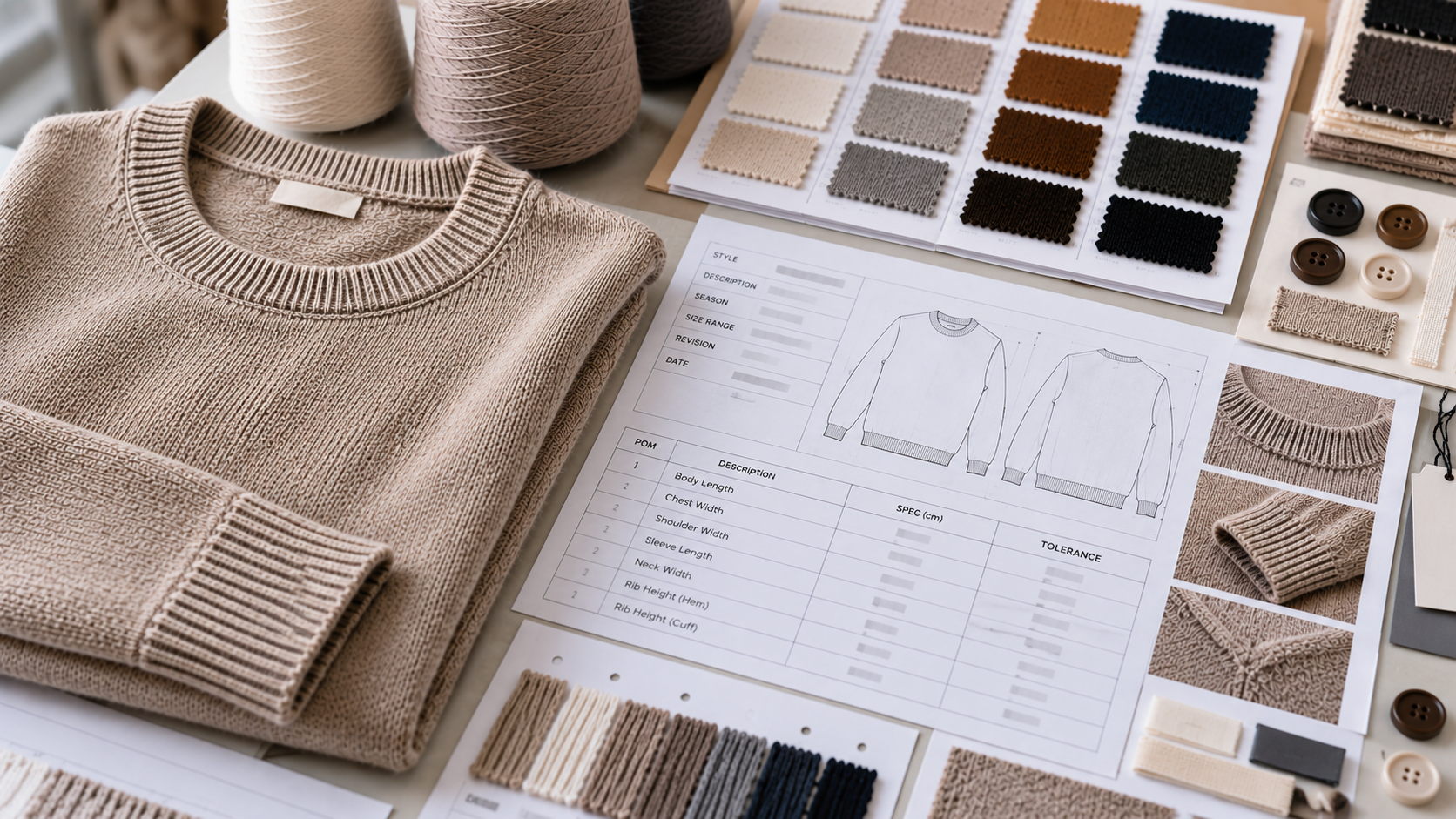
If you have a tech pack, send the measurement chart. Otherwise, useful information may include the intended sample size, chest width, body length, sleeve length, and expected size range.
For example:
“Women's relaxed-fit cardigan, sample size M, with a cropped body length.”
You can also attach measurements from an existing garment that represents the fit you want.
At the initial quotation stage, every measurement does not necessarily need to be finalized. The purpose is to give the manufacturer enough information to understand the intended garment rather than estimate its proportions from a photograph alone.
Final measurements, grading, and acceptable tolerances can be confirmed during product development.
4.Clarify Construction and Decorative Details
One of the most easily overlooked issues in knitwear enquiries is how a particular design detail will be produced.
A logo, for example, might be knitted into the fabric, embroidered, printed, or applied using another method.
These techniques are not interchangeable from a production perspective.
If the production method is already decided, mention it clearly.
If you only know the appearance you want, explain that the method is still open for discussion.
For example:
“Small chest logo. Placement is confirmed, but the application method is open to recommendation.”
The same principle applies to special stitch patterns, pockets, buttons, zippers, decorative trims, and embellishments.
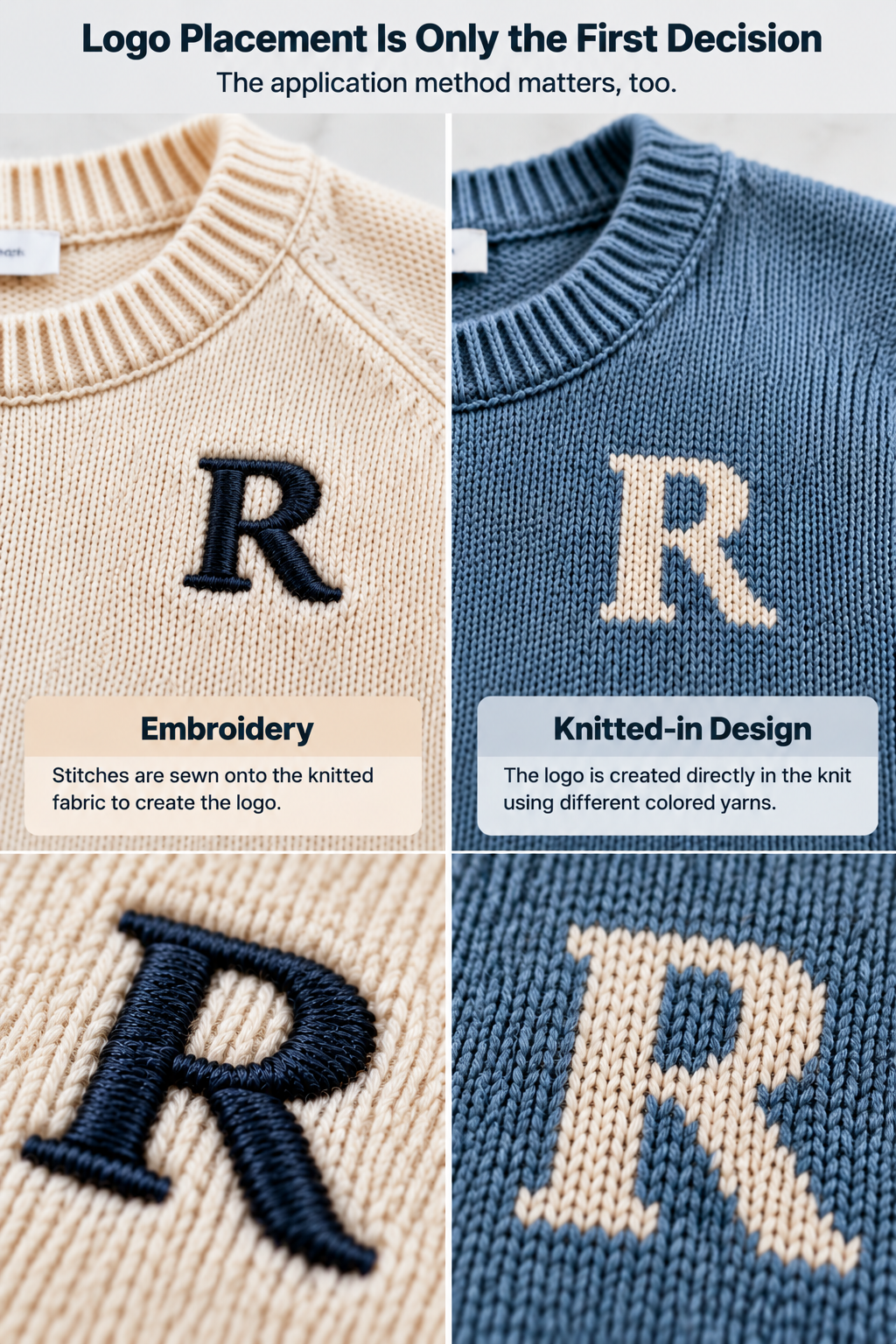
You do not need to understand every knitting technique before contacting a manufacturer. Clear reference images and a description of the desired appearance can help the factory assess possible construction methods.
What matters is distinguishing confirmed requirements from details that still need development.
5.Provide the Order Breakdown, Not Just the Total Quantity
A total order quantity is useful, but it does not tell the manufacturer how the order will be divided.
When requesting a quotation, try to include the expected number of colors, approximate quantity per color, and size range.
For example:
“300 pieces in total, across three colors, approximately 100 pieces per color, sizes XS–XL.”
If the size breakdown has not been finalized, say so.
These details help the manufacturer evaluate the proposed order structure.
They also reduce the risk of comparing quotations that were prepared using different quantity assumptions.
6.Clarify Additional Requirements and What the Quote Should Include
A sweater quotation may involve more than the knitted garment itself.
If your project requires custom neck labels, care labels, hangtags, special packaging, specific testing, or other additional services, mention them when requesting the quotation.
It is also worth clarifying the intended delivery terms.
For international orders, for example, an EXW quotation and an FOB quotation do not cover the same responsibilities and costs.
When comparing suppliers, check whether their quotations include the same items and are based on comparable delivery terms.
A lower quoted unit price is not necessarily a more economical offer if important requirements have been excluded.
You do not need to finalize every shipping detail during the first enquiry. However, identifying your known requirements—and asking the manufacturer to state what is included and excluded—makes the quotation easier to understand.
7.A Simple Brief for Your First Knitwear Quote
You do not need a lengthy technical document to begin a conversation with a knitwear manufacturer.
A short, organized product brief can be enough for an initial evaluation.
Here is an example.
| Item | Information |
| Product | Women's cropped cardigan |
| Reference | Attached design sketch and reference photo |
| Material direction | Soft wool blend, medium weight |
| Fit | Relaxed fit |
| Sample size | M |
| Size range | XS–XL |
| Colors | 3 colors |
| Estimated quantity | 300 pcs total, approximately 100 pcs per color |
| Decoration | Small chest logo |
| Special requirements | Custom neck label |
| Quotation requirements | Please specify packaging inclusions and delivery terms |
| Open points | Final yarn specification, logo application method, and size breakdown |
This brief is not a replacement for a final production tech pack.
However, it gives the manufacturer a clear understanding of the product concept, expected order, confirmed requirements, and unresolved details.
It also creates a useful starting point for identifying which decisions need to be made before the final production quotation can be confirmed.
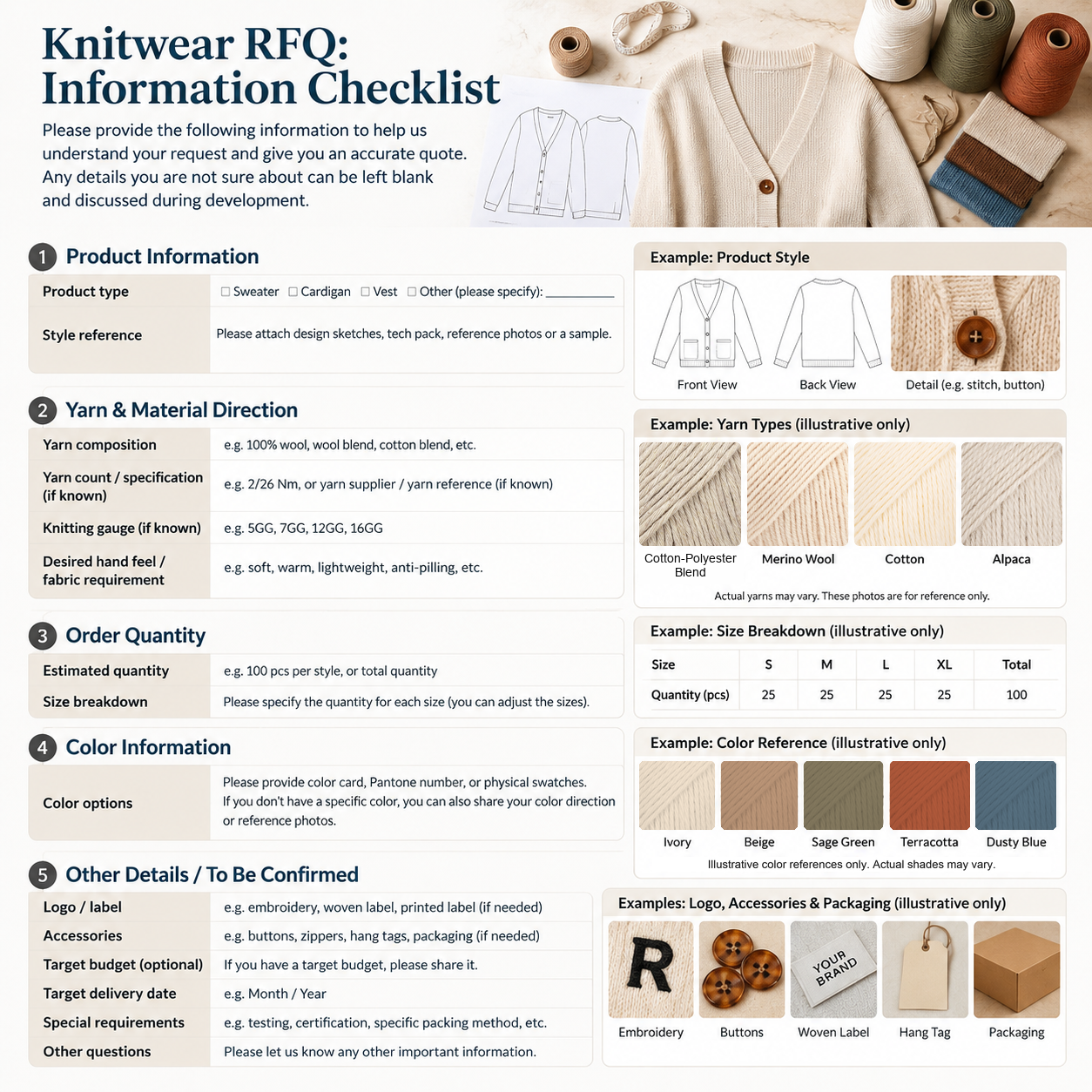
A Clear Enquiry Leads to a More Useful Quotation
A quotation should be more than a number attached to a product photo.
It should be based on a shared understanding of what the brand wants to produce and what the manufacturer is expected to supply.
A clear quotation request helps both sides discuss suitable materials, construction methods, potential adjustments, and the next steps in product development.
Not every detail needs to be finalized at the beginning. But clearly identifying what is confirmed, what is estimated, and what still needs discussion can make the entire quotation process more productive.
The better the product requirements are understood, the more meaningful the quotation becomes.