 中文
What Causes Pilling in Knitwear, and How Can Brands Evaluate It?
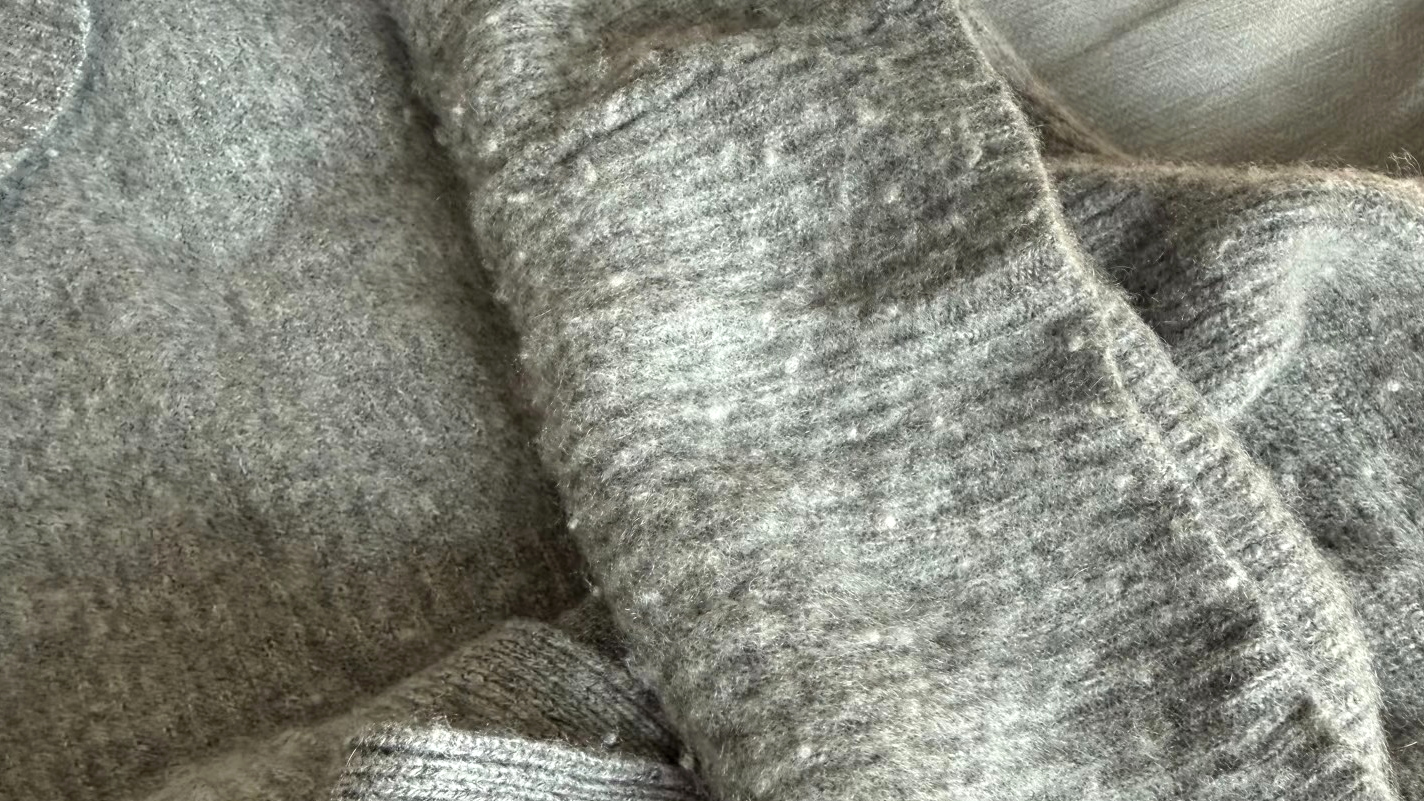
Pilling is a common concern when developing knitwear. A sweater may look smooth when new, but small fiber balls can appear on its surface after repeated friction.
For fashion brands, the key question is not simply whether a sweater pills, but how its surface changes during use and whether that change is acceptable for the intended product.
Pilling is influenced by several factors, including fiber properties, yarn construction, knitted fabric structure, finishing, and conditions of use. Understanding these factors helps brands evaluate samples more carefully before moving to bulk production.
1.What Causes Pilling?
Pilling occurs when fibers emerge from a fabric surface, become entangled, and form small balls attached to the material. The process generally involves fuzz formation, fiber entanglement, pill growth, and eventual wear-off.
Repeated friction can contribute to this process. However, the location and severity of pilling depend on the garment's construction, fit, and conditions of use.
Fuzzing and matting are related but distinct surface changes. These changes can affect a garment's appearance even when visible pills are limited. A useful evaluation should therefore consider the overall surface condition, not simply the number of visible pills.
Source: Wang and Qian, Pilling-resistant knitwear (2018). Read the technical chapter.
2.Why Does Yarn Choice Matter?
Fiber composition is an important starting point, but it does not determine pilling performance on its own.
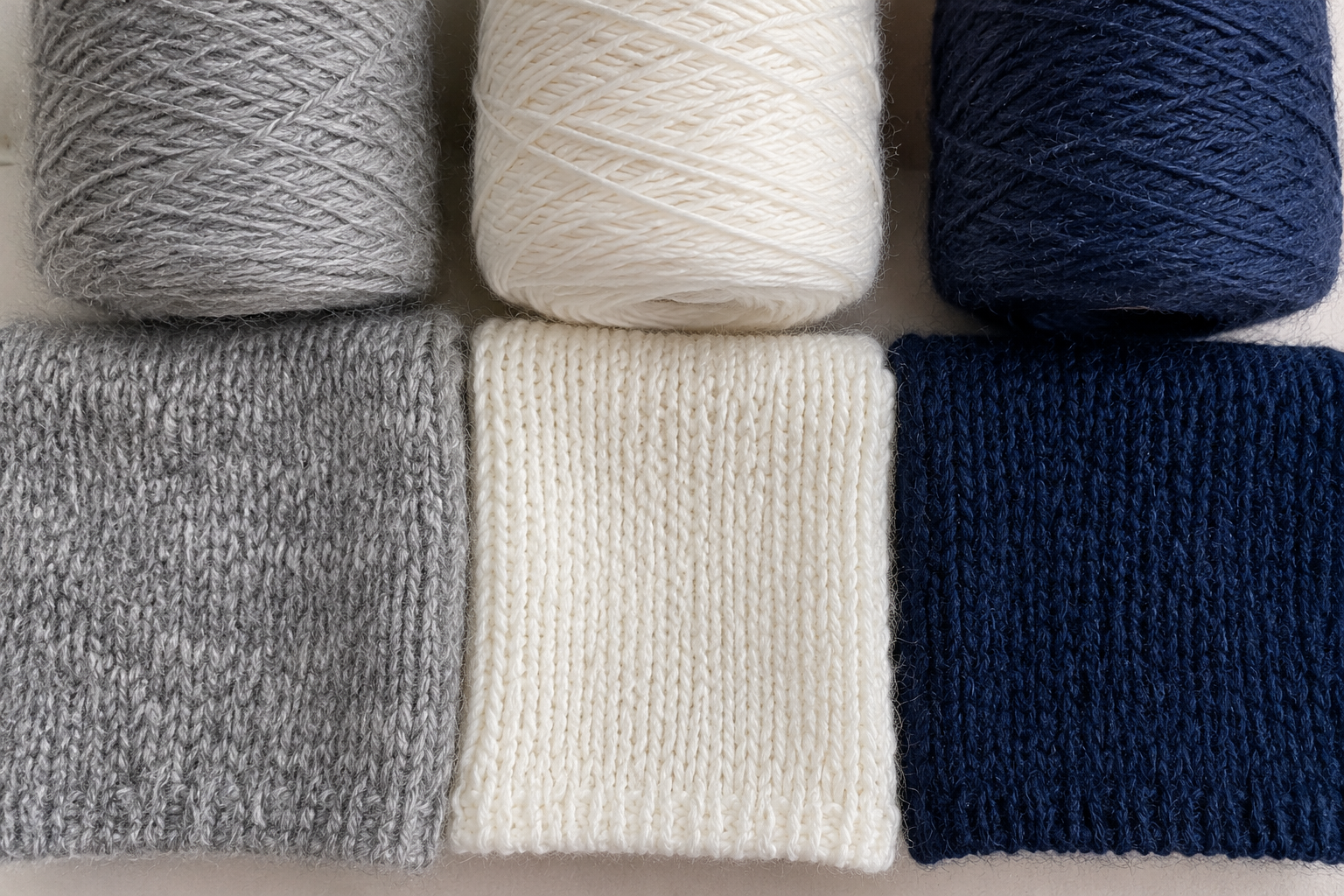
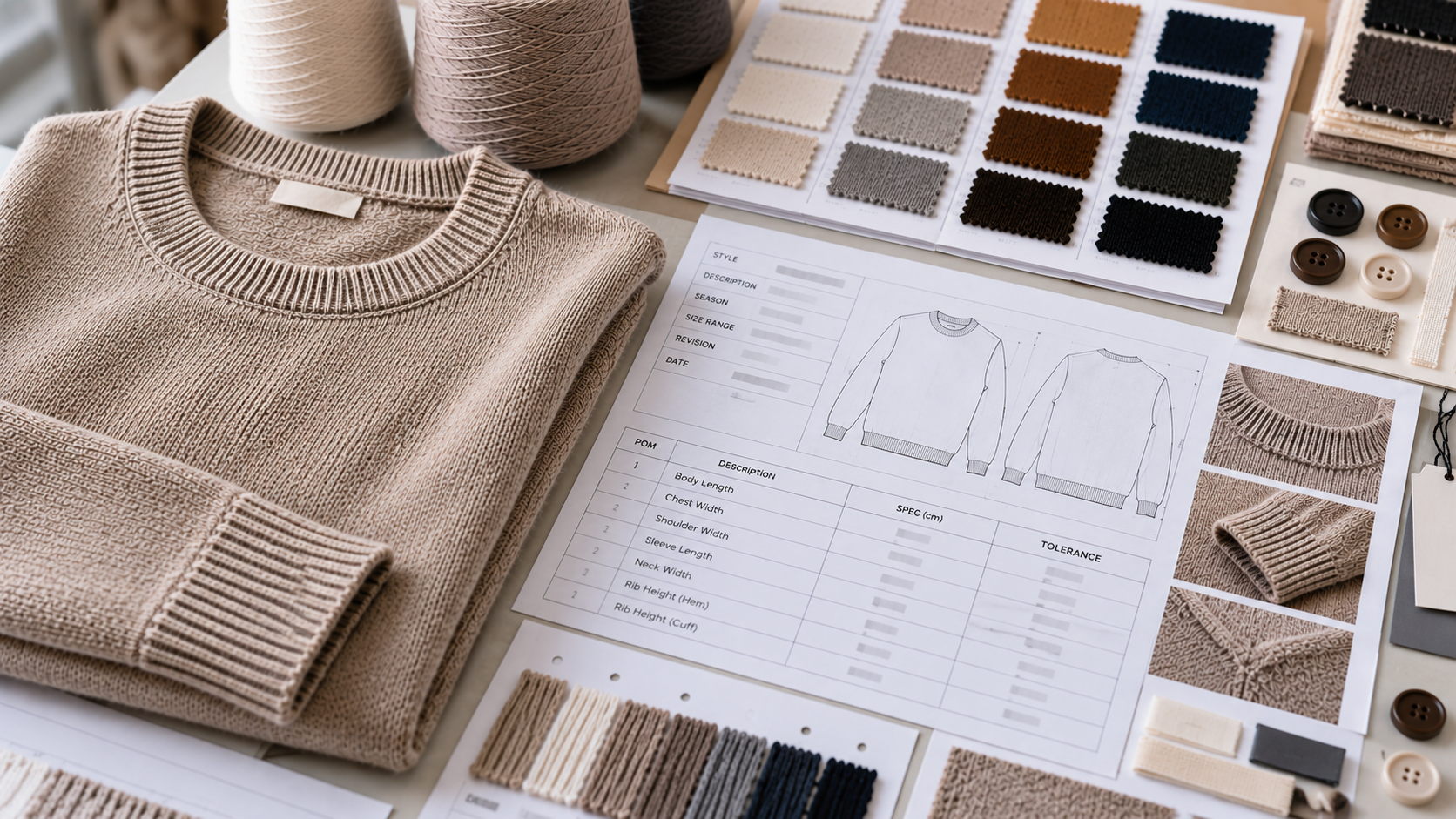
(Illustrative comparison of yarn textures and knitted fabric surfaces. Different yarn characteristics and knitting structures can produce different fabric appearances.)
Fiber dimensions, yarn construction, and the way fibers are held within the yarn can influence their tendency to emerge from the fabric surface. Yarn hairiness and twist may also affect surface fuzz and fiber movement.
This helps explain why two sweaters with the same stated fiber composition may show different pilling behavior.
For brands, the practical lesson is straightforward: do not judge pilling resistance from the fiber label alone. The actual yarn and knitted fabric should be evaluated together.
3.How Does Knitted Fabric Structure Affect Pilling?
Stitch construction, fabric compactness, and yarn arrangement can influence how a knitted fabric behaves under friction.
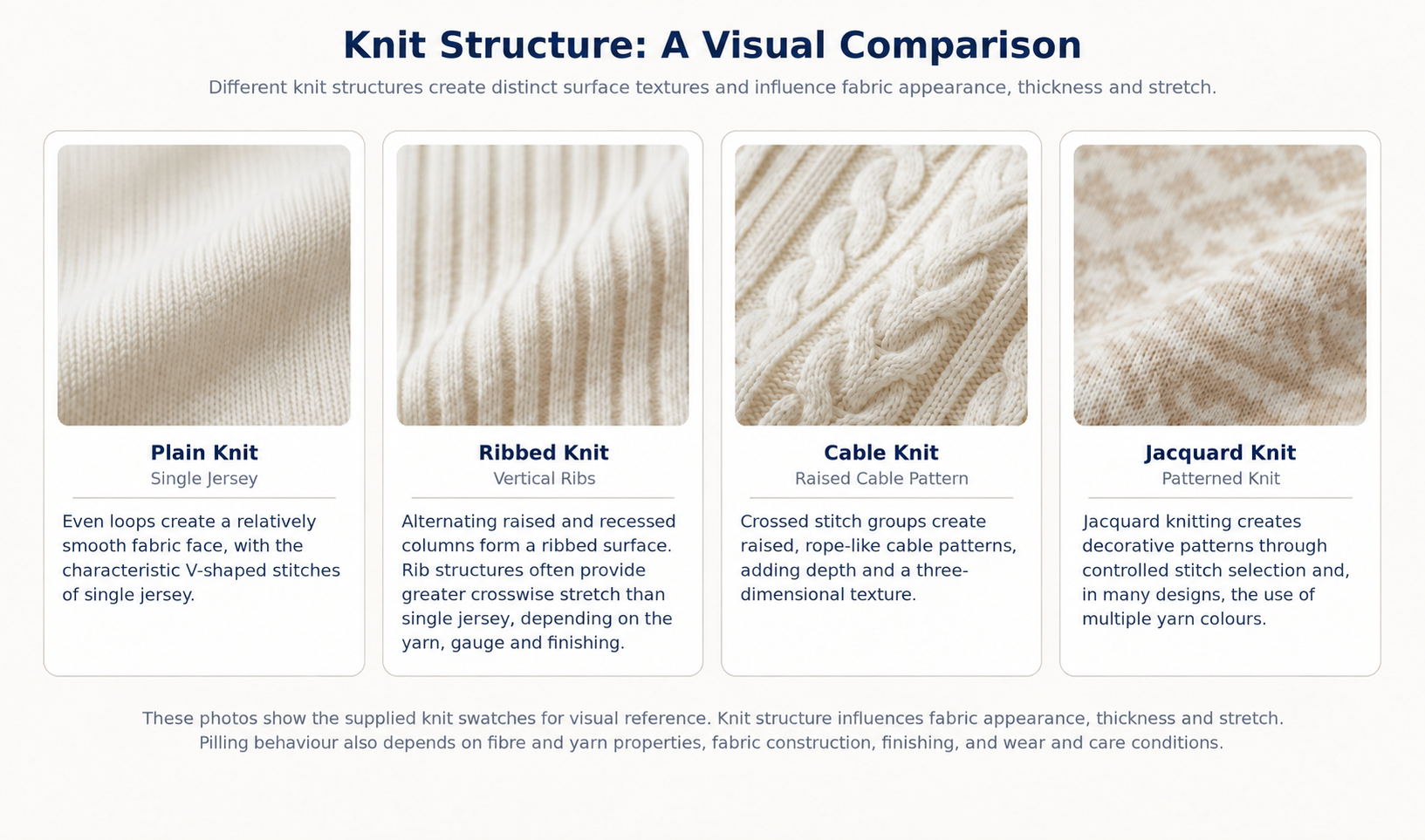
A more compact structure may help reduce pilling in some cases, but the effect depends on the materials and construction involved. Changes intended to influence pilling can also affect softness, bulk, and drape.
For example, a brand may want a soft, lofty sweater while also expecting its surface to remain smooth after repeated wear. These requirements should be considered together rather than treating pilling resistance as an isolated target.
The goal is to find an appropriate balance between the intended appearance, hand feel, and expected performance of the garment.
Source: Wang and Qian, Pilling-resistant knitwear (2018). Technical reference.
4.Can Finishing Make a Difference?
Yes. Finishing treatments can affect the surface condition of knitted fabric and its pilling behavior. The effect depends on the material and the specific treatment used, so one finishing process should not be assumed to improve every knitwear style.
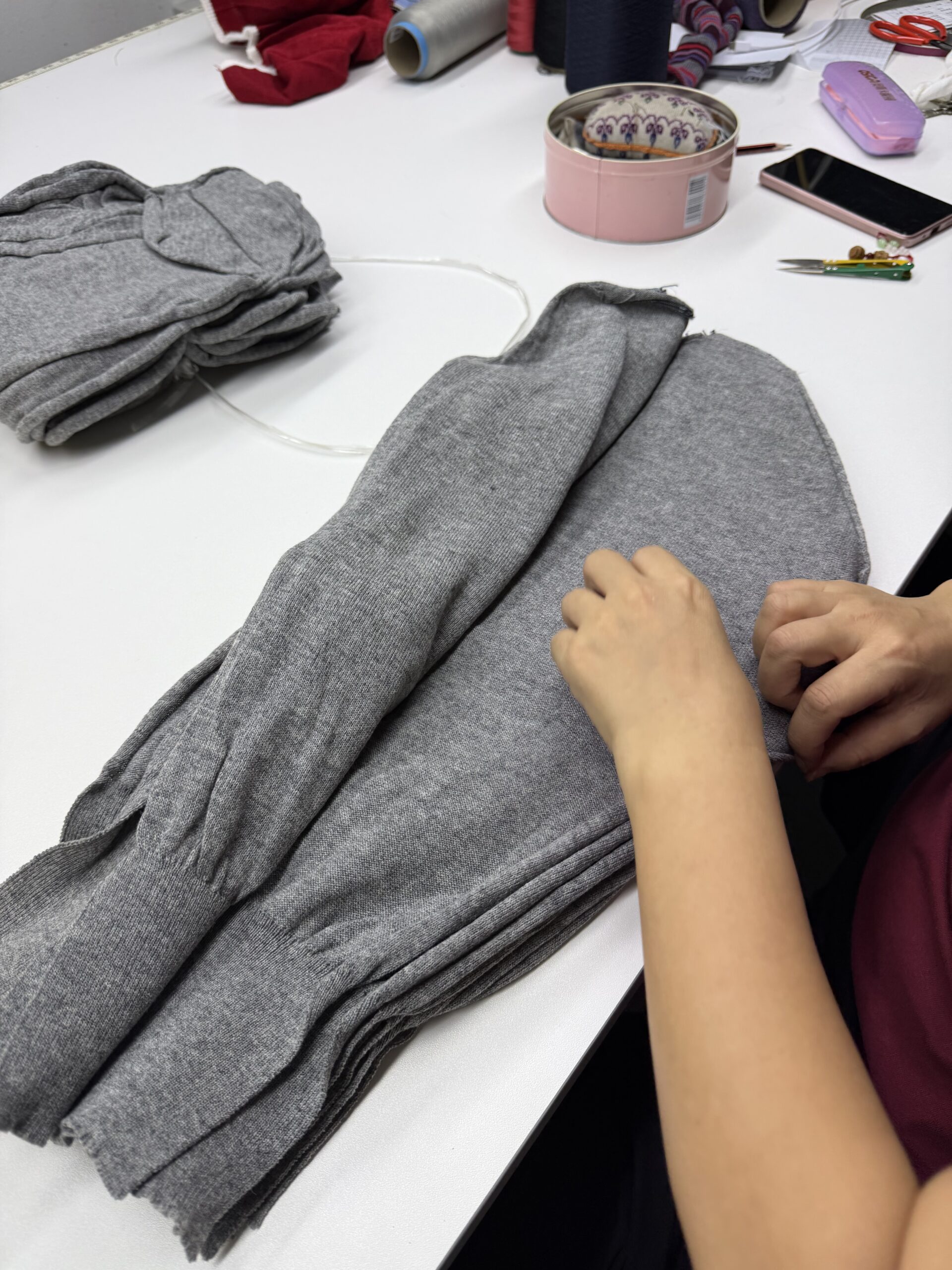
ASTM D4970/D4970M addresses the evaluation of pilling and related surface changes in textile fabrics. The standard also provides for testing fabric in its received condition or after laundering or dry-cleaning, depending on the agreed requirements.
For product development, this means the sample condition matters.
If a production wash or other finishing process forms part of the intended garment, the fabric should be evaluated in the relevant finished condition. Consumer laundering is a separate consideration and should be addressed when it is relevant to the product requirements.
Source: ASTM International, ASTM D4970/D4970M-22(2026).
5.How Should Brands Evaluate Pilling?
A useful evaluation begins during development, before bulk production.
First, examine the actual fabric or sample.
Review its surface appearance, hand feel, construction, and intended use. A fiber specification alone cannot establish how the finished fabric will perform.
Second, compare samples under consistent conditions.
When comparing different yarns or fabric constructions, use the same agreed testing method and comparable specimen conditions. Otherwise, differences in results may reflect differences in testing rather than the materials alone.
Third, consider the intended product.
A lightweight sweater worn directly against the skin may have different performance priorities from a chunky outer-layer knit. The acceptable surface appearance should reflect the garment's intended positioning and use.
Finally, use an appropriate test when required.
ISO 12945-2:2020 specifies a modified Martindale method for evaluating the resistance of textile fabrics to pilling, fuzzing, and matting.
This is a test method for fabric specimens, not a guarantee of how a finished garment will perform under every real-world wearing condition.
An Important Note About Test Results
A test result should not automatically be treated as a universal pass-or-fail decision.
ASTM D4970/D4970M-22(2026) states that its method is not recommended for acceptance testing because interlaboratory data are unavailable. If it is used for acceptance testing, the standard advises caution.
The standard also notes that actual wear may produce different results from controlled laboratory tests. Overall surface appearance should be considered rather than relying solely on the number of pills.
Before testing, the brand and manufacturer should agree on the test method, specimen condition, evaluation criteria, and any required acceptance level.
Source: ASTM International, ASTM D4970/D4970M-22(2026).
6.What Should Be Agreed Before Bulk Production?
If pilling is an important concern for a particular style, discuss it during development rather than waiting until bulk garments have been produced.
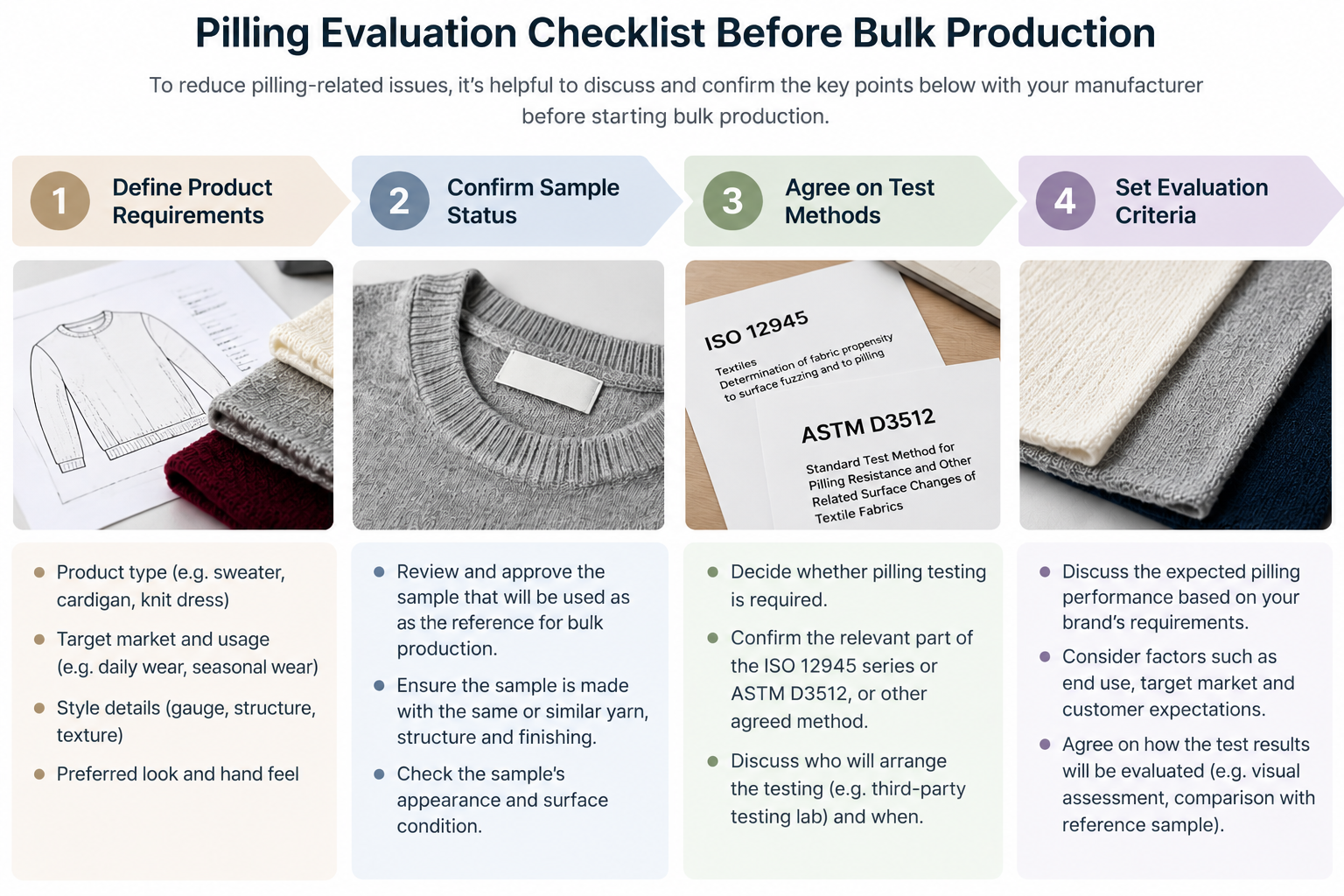
(Illustrative checklist for discussing pilling evaluation before bulk production. Testing requirements, methods and evaluation criteria should be agreed upon with the manufacturer. Testing arrangements can be discussed when required.)
Use this checklist to guide the discussion with your knitwear manufacturer:
- Expected appearance: What surface texture and hand feel does the brand want to maintain?
- Material and construction: Which yarn and knitted fabric construction have been selected?
- Sample condition: Should the fabric be evaluated before or after the relevant finishing process?
- Testing method: Is a specific pilling test required?
- Acceptance criteria: What result is considered acceptable for this product, and how will it be assessed?
These requirements should be clarified before testing begins. If formal testing is required, we can discuss the testing arrangements based on your product requirements. The appropriate method, specimen condition, and evaluation criteria should be confirmed in advance.
Avoid promising that a sweater will never pill. Pilling behavior depends on material properties, construction, finishing, and actual use. A laboratory result cannot guarantee identical performance under every real-world condition.
A clear specification gives both sides a more consistent basis for evaluating the product.
The Key Takeaway
Pilling is not determined by fiber composition alone. Yarn properties, knitted structure, finishing, and conditions of use all contribute to how a sweater's surface changes over time.
For fashion brands, the most useful approach is to evaluate the actual fabric, define the expected performance, and agree on suitable testing conditions when necessary.
The goal is not simply to find a yarn that promises less pilling. It is to develop a knitwear product whose surface appearance and performance suit its intended use.
Developing a Knitwear Style with Specific Pilling Requirements?
Share your design reference, material preferences, and intended use with our team. We can discuss your product requirements during development and clarify possible testing arrangements if formal evaluation is needed.
Contact Us About Your Knitwear Project
References
- Wang, L., & Qian, X. (2018). “Pilling-resistant knitwear.” Engineering of High-Performance Textiles. DOI: 10.1016/B978-0-08-101273-4.00026-3
- ASTM International. ASTM D4970/D4970M-22(2026): Standard Test Method for Pilling Resistance and Other Related Surface Changes of Textile Fabrics: Martindale Tester. Official ASTM standard page
- International Organization for Standardization. ISO 12945-2:2020: Textiles — Determination of fabric propensity to surface pilling, fuzzing or matting — Part 2: Modified Martindale method. Official ISO standard page